Get Full Government Meeting Transcripts, Videos, & Alerts Forever!
Get email alerts on the Medical Cannabis Regulation topic
No spam. Unsubscribe anytime.
Committee clears wide-ranging regulatory tweaks to Utah medical-cannabis program
Summary
Senators unanimously approved a first substitute to SB 64, which contains technical and enforcement-related changes to Utah's medical cannabis program, including non-public 'letters of concern' for low-level violations, expanded advisory-board oversight, courier-license portability, and training and surveillance clarifications.
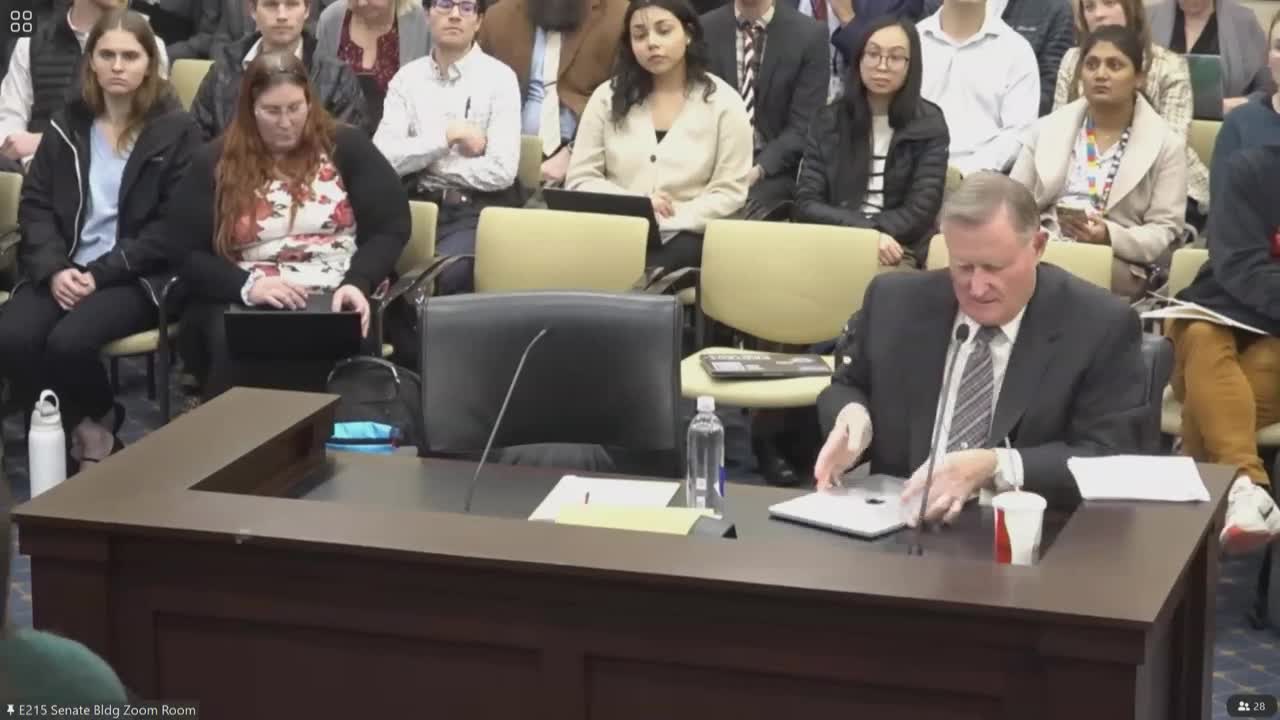
The Senate Health and Human Services Committee unanimously passed a first substitute of Senate Bill 64, a package of regulatory changes to Utah’s medical cannabis program intended to streamline licensing and enforcement and align several definitions and enforcement tools with other state programs.
Sponsor Senator Vickers said the substitute collects a variety of mostly technical updates developed with industry, patients, and agencies. Among the changes described: removal of a Division of Finance banking-scrutiny provision, standardization of the lookback period for certain disqualifying felonies to 10 years for courier-agent registration, addition of courier licensing to the agriculture licensing advisory board, and changes meant to increase employee portability between cannabis pharmacies.
On enforcement, Vickers said the bill would allow the Department of Agriculture and Food to issue an administrative “letter of concern” for non–public-health-threatening, minor compliance problems (for example, temperature recording or clerical recordkeeping issues). The letter of concern would provide suggested remedies and a 30-day reinspection window; if corrected, the letter would not become public. The sponsor said more serious violations would still allow for citation and fines.
The Department of Agriculture’s Cody James testified that the department supports many of the substitute’s changes, including a 45-day surveillance-retention clarification and a 45-day timeline for notifications after ownership changes. Industry witnesses — JD Lawrence (WholesomeCo), Justin Areola (Life Elevated Processing), and Narath Pawn (Dragonfly) — spoke in support, praising the bill as common-sense and helpful to program operations.
Senator Stevenson moved the substitute and the committee voted to pass the first substitute and then to advance the bill favorably to the Senate floor. Committee minutes record the committee vote as 4–0 in favor.