Get Full Government Meeting Transcripts, Videos, & Alerts Forever!
Get email alerts on the Public Health Environmental Health topic
No spam. Unsubscribe anytime.
Senate committee advances bill to formalize coordination between DEQ and local health departments
Summary
A Senate Health and Human Services committee unanimously advanced SB 172, a bill to formalize coordination and a cooperative-agreement requirement between the Department of Environmental Quality and Utah’s 13 local health departments.
A Senate Health and Human Services committee on an unspecified 2025 date unanimously advanced Senate Bill 172, a measure to formalize coordination between the Department of Environmental Quality (DEQ) and Utah’s 13 county-level local health departments.
Sponsor and local health department representatives told the committee the bill would create a policy framework modeled after the existing Department of Health and Human Services (DHHS) arrangement to clarify roles, guide rulemaking, and direct resource allocation for environmental health services statewide. Jordan Mathis, representing the Association of Local Health Departments, said the bill “provides clarity through a policy framework that supports a systems approach between DEQ and local health departments” and asked the committee to adopt language that would require cooperative agreements and coordination on proposed rule development and resource allocation.
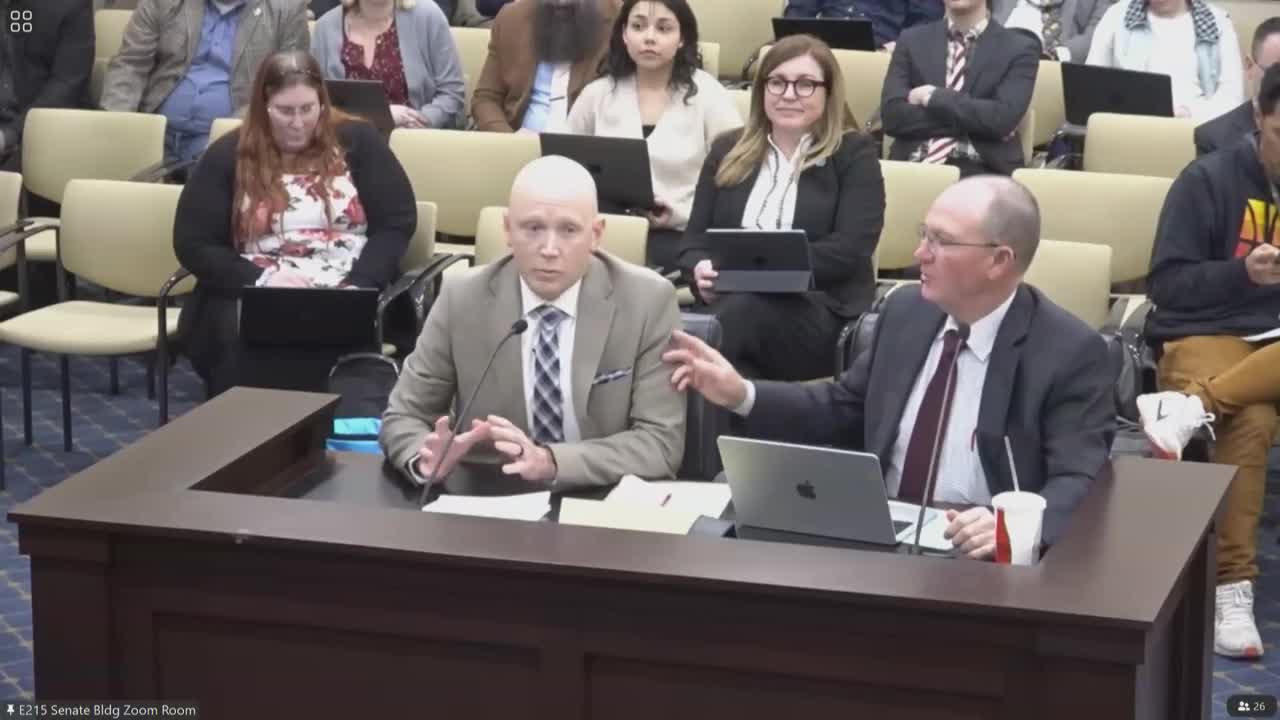
Kim Shelley, executive director of the Department of Environmental Quality, testified as a public witness and urged changes. Shelley said DEQ already meets routinely with local health departments, pointed to existing governance structures and statutory responsibilities, and flagged three key concerns: (1) the bill’s language could conflict with Title 26A-1-103 (county funding responsibilities for local health departments), (2) the governance committee the bill would create appears duplicative of an existing statutory committee, and (3) the civil-penalty recoupment provision could impose significant, unknown costs on DEQ because civil enforcement proceedings require agency-paid legal costs. “Those proceedings ... are not self-executing,” Shelley said, noting the agency would need to pay attorneys and that the fiscal impact depends on how broadly the civil-penalty authority is applied.
Committee members asked clarifying questions about the reason for codification, the proportion of work local health departments do with DEQ versus DHHS, and whether all local health departments supported the bill. Mathis said the intent is to mirror the DHHS framework because it has helped resolve roles and resource-allocation questions. Shelley acknowledged ongoing coordination but recommended the sponsor and drafting attorney work to harmonize the bill with existing statutes and to better define fiscal responsibilities.
Senator Jerry Stevenson moved SB 172 be advanced from committee; the motion passed unanimously (recorded 3–0 in committee minutes). The sponsor said negotiations would continue to address DEQ's concerns.