Get Full Government Meeting Transcripts, Videos, & Alerts Forever!
Get email alerts on the Public Sector Unions topic
No spam. Unsubscribe anytime.
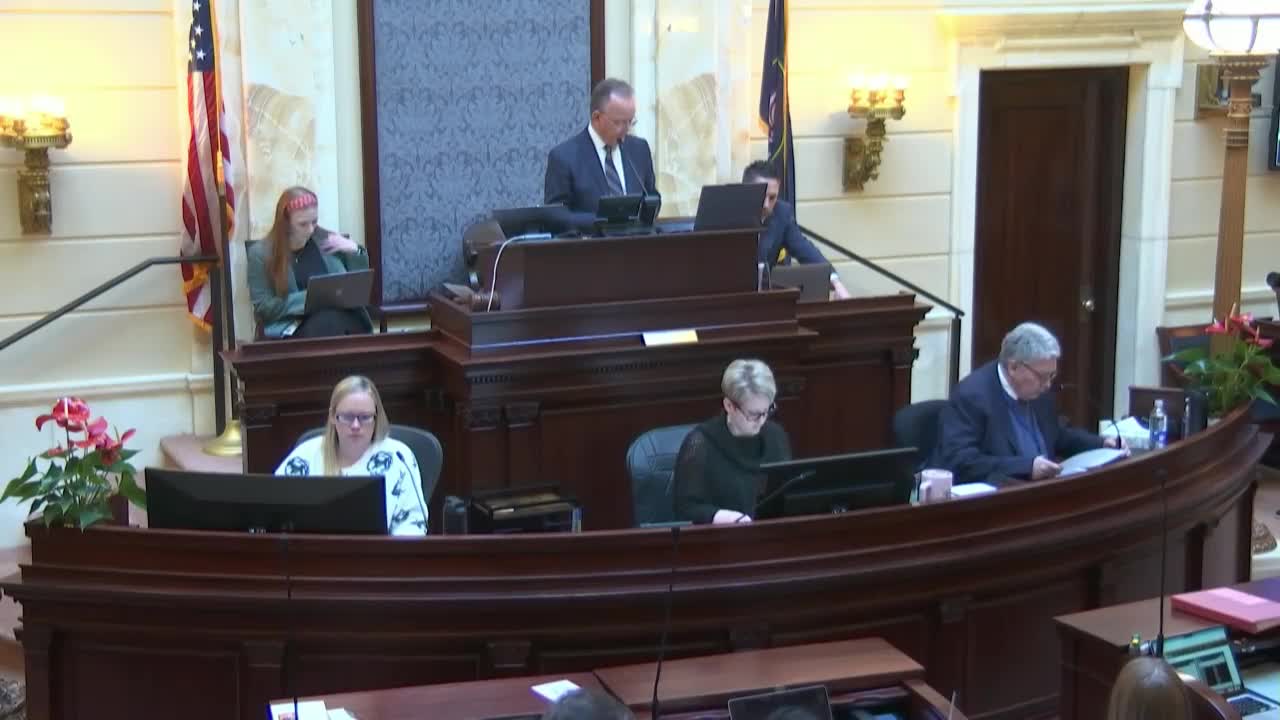
Utah Senate advances bill limiting public-sector collective bargaining after hours of debate
Summary
The Utah Senate voted to advance First Substitute House Bill 267 after extended floor debate, approving a motion to read the measure a third time on a 18–10–1 roll call so that further amendments or a substitute can be considered.
The Utah Senate advanced First Substitute House Bill 267, a measure that would restrict collective bargaining for many public employees and impose new reporting and conduct limits on labor organizations, by a roll-call vote to read the bill for a third time.
Senator Daniel Cullimore, sponsor of the bill, moved that the first substitute of House Bill 267 be read a third time; the motion carried on a roll call tally the Senate recorded as 18 in favor, 10 opposed and 1 absent. That procedural vote sends the measure deeper into the chamber’s consideration, where sponsors said a further substitute would be offered.
The bill drew extensive floor debate from members across the political spectrum. “This bill does not abolish public sector unions,” Cullimore told colleagues in his opening remarks, saying the measure would remove a statutory mandate for collective bargaining in many public-employee settings while preserving employees’ ability to join unions and to pursue representation through a certification process in a substitute the sponsor described as forthcoming. “It puts the unions on the same footing as everybody else,” he said, arguing that public resources should not be used for union political lobbying.
Opponents said the bill would weaken representation for firefighters, teachers, police and other public employees and could harm safety and morale. Senator Luz Escamilla questioned a disclosure requirement in the bill and noted existing statutory limits on the use of dues for political purposes, asking why the bill would add additional reporting duties. “This is a very direct attack on unions, period,” Escamilla said, arguing that many of the protections the bill addresses already exist in state law.
Senator Derek Eby, a public-school teacher and union member who spoke against the measure, described constituent outreach opposing the bill and said it would be “un-American” to proceed without the promised substitute in hand. Senator Jada Stevenson and several other senators urged the sponsor to circulate the substitute and said they were voting to allow the process to continue rather than as an endorsement of the current draft.
Supporters framed the measure as a fiscal and accountability reform. Senator Aaron Brammer said public-sector collective bargaining is “incompatible with the spirit of democracy” in its concern that public employees could be positioned to dictate government operations, and argued the bill offers alternative ways for employees to obtain liability insurance and other protections currently offered by unions.
Procedural outcome and next steps: Senate leaders and the bill sponsor repeatedly said a substitute is expected; the third-reading motion that passed will allow the Senate to consider that substitute and move toward final passage or further amendment. The bill remains subject to later votes and possible changes in committee or on the floor.
Votes at a glance
- First Substitute House Bill 267 (Public sector labor union amendments): motion to read third time approved 18–10–1 (procedural vote to advance; further amendments/substitute expected).
- House Bill 1 (Higher education base budget): passed under suspension of rules; recorded as 27–1–1 (returned to House for speaker’s signature).
- House Bill 4 (Economic and community development base budget): passed under suspension, recorded as 26–0–3.
- House Bill 5 (General government base budget): passed under suspension, recorded as 28–0–1.
- House Bill 6 (Transportation and infrastructure base budget): passed under suspension, recorded as 27–0–2.
- House Bill 7 (National Guard, Veterans Affairs, and Legislature base budget): passed under suspension, recorded as 27–0–2.
- House Bill 11 (Native American Remains Review Committee amendments): final passage recorded as 24–0 with 5 absent.
- House Bill 16 (Health facility administrator act amendments): final passage recorded as 26–0 with 3 absent.
What it means
The sponsor says the measure is intended to limit the use of public resources for union political activity, to expand the pool of eligible appointees for certain public boards, and to create alternative paths to liability coverage for educators outside union contracts. Opponents say the bill would curtail local control and weaken protections and representation for public safety workers, teachers and other public employees. Senators on both sides urged patience for a substitute the sponsor plans to circulate; several senators said they voted to advance the bill to allow continued negotiations rather than as support for the current text.
The Senate will take up any substitute language in future floor action; if passed by the Senate in a final form it would return to the House for concurrence or conference if the House does not accept amendments.