Get Full Government Meeting Transcripts, Videos, & Alerts Forever!
Get email alerts on the State Debt Collection topic
No spam. Unsubscribe anytime.
State debt-collection office outlines portfolio, pilot efforts and $1.7 billion receivables
Summary
Officials from the Office of State Debt Collection told the committee they manage roughly 500,000 accounts (about 90% tied to criminal-justice agencies), operate with 19 full-time staff, and have an all-time portfolio value of about $1.7 billion; they reported a record collections year after a new system launch but said some successful internal-
Ally Branch, assistant director in the Division of Finance, and Paul Bowers, manager of the Office of State Debt Collection (OSDC), briefed the General Government Appropriations Subcommittee on the office's operations, caseload and recent investments in a new collections system.
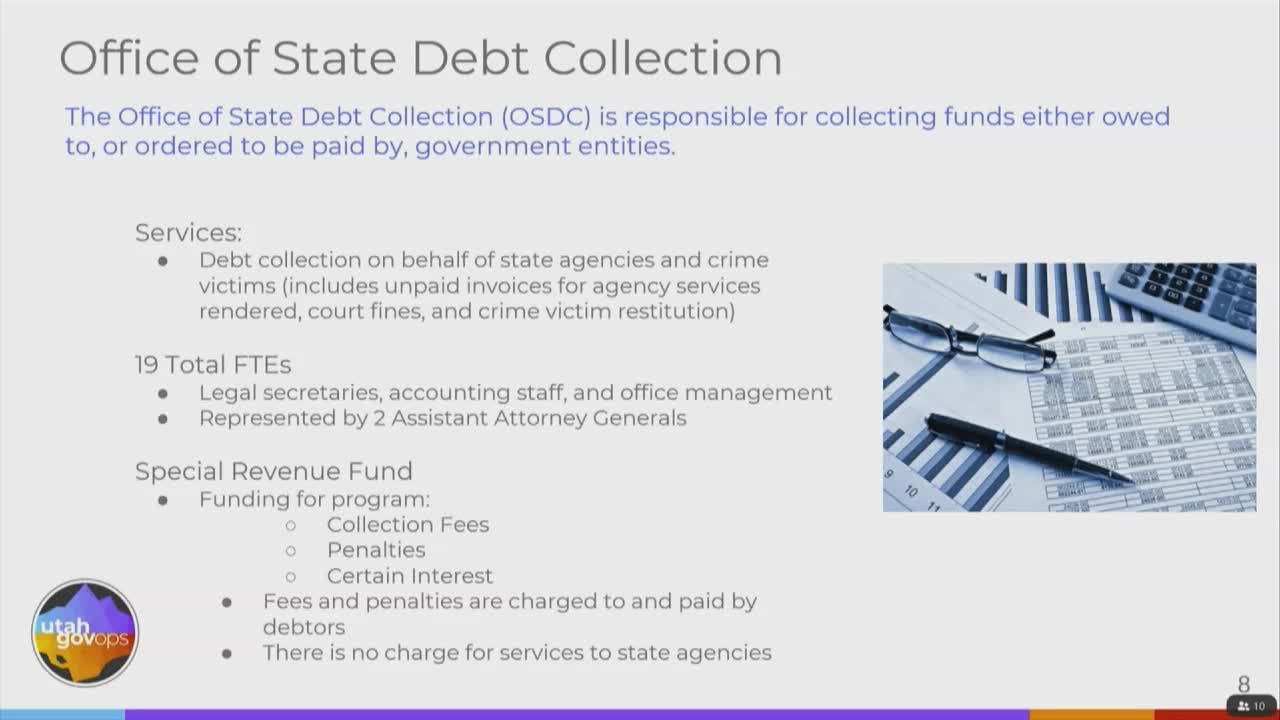
"OSDC is responsible for collecting debts for any past-due receivables or imposed fines for members of the public," Branch said. She told the committee the office holds about 500,000 accounts and that roughly 90% of those accounts stem from the Department of Corrections or the courts. The office employs 19 full-time employees and operates in a special revenue fund financed by fees, penalties and interest charged to debtors rather than by agency charges.
Bowers said the office broke its previous collections record after implementing a new main collection system early in fiscal 2024 and negotiated what he described as the largest settlement in the office's history. He said OSDC plans to integrate the new system with a citizen-portal initiative and that Representative Ballard will introduce a bill to fund that integration.
The office described performance targets and limits: a stated goal is to keep collection costs below $0.25 on the dollar. Branch told the committee the office's statutory revenue cap is about $4,000,000 (the amount allowable per statute for the office's fund), and that the office is balancing higher operating costs caused by increased Attorney General's Office rates and the expense of the new system.
Bowers described a pilot of an internal collections team that successfully collected additional revenue, but said administrative costs made that approach not cost-effective to maintain; the office retained those employees and shifted them to legal-secretary roles where they file garnishments and handle court processes that have a predictable yield. The office said garnishments and legal process work are reliable revenue sources, but they also noted higher administrative and legal costs as more aggressive collection methods require more attorney time.
Bowers and Branch told the committee the office's total portfolio value is roughly $1.7 billion all-time and that considerable additional recoverable receivables remain. Committee members pressed on staffing and cost-effectiveness; the office said increased collections over the past year came with higher operating costs but that new system tools and targeted garnishment work are producing measurable gains.
Ending: Committee members requested more detailed performance metrics (dollar-by-dollar returns, administrative costs and garnishment costs) and suggested examining whether the state's multiple collection operations should be coordinated for efficiency; OSDC said it will provide additional data to the committee.