Get Full Government Meeting Transcripts, Videos, & Alerts Forever!
Get email alerts on the State Sovereignty topic
No spam. Unsubscribe anytime.
Committee advances HB 158 asserting that international organizations cannot impose mandates on Utah
Summary
House Bill 158, the state sovereignty amendment, won committee approval after contentious debate and a sizable public comment period, with proponents saying it preserves Utah elected officials’ authority and opponents warning it could hamper use of international technical expertise.
The committee voted to favorably recommend the 1st substitute of House Bill 158, a measure that would bar Utah governmental bodies from implementing rules, mandates or taxes issued by international organizations such as the World Health Organization, United Nations or World Economic Forum and that clarifies emergency directives must originate from Utah’s elected officials.
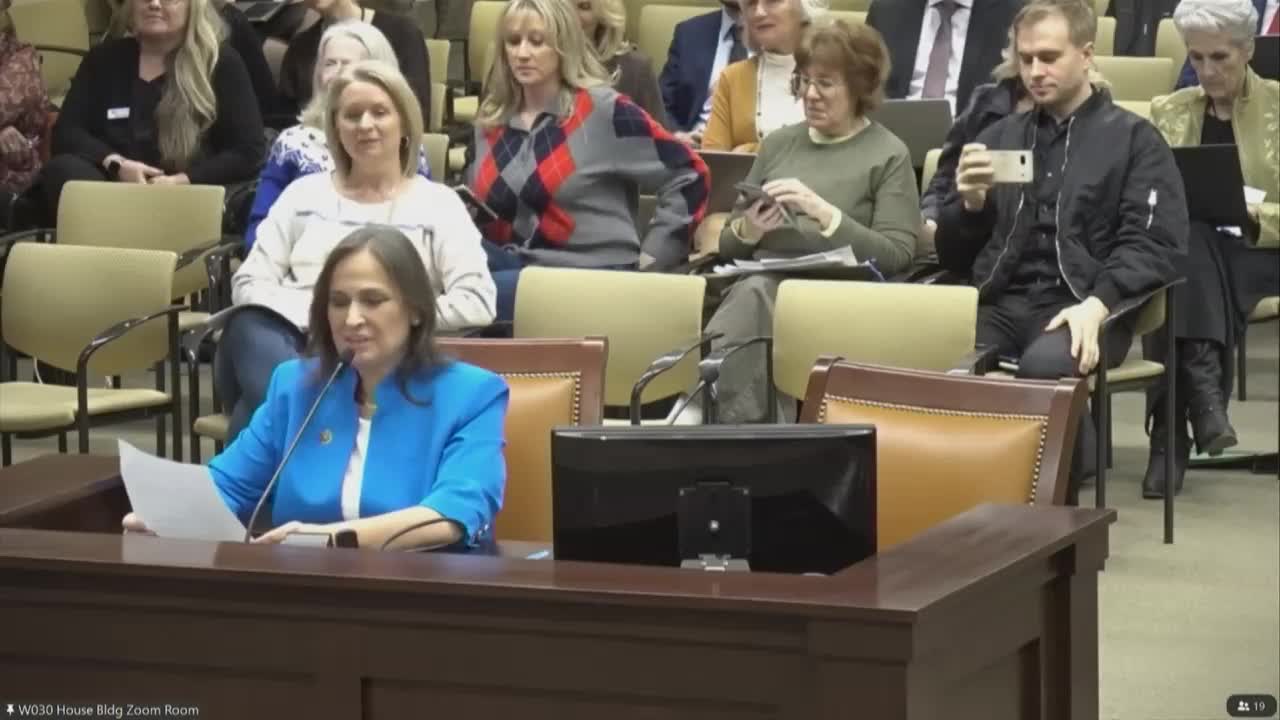
Sponsor Representative Shepherd said the bill “reinforces Utah’s sovereignty” and would ensure that “no rule, regulation, tax or mandate from these entities shall be implemented or enforced by any Utah governmental body.” She framed the measure as a statement that elected Utah officials — the governor and other state leaders — will make emergency and other policy decisions for Utah.
Committee members pressed the sponsor on how the bill would interact with technical information from international organizations and whether the bill would force agencies to reject grants or technical assistance. The sponsor repeatedly answered that the governor could and should consult experts and make decisions based on advice from local officials and experts rather than be bound by directives from international bodies. The bill text and committee discussion clarified the sponsor’s intent: the bill aims to prevent international organizations from dictating policy in Utah, while not forbidding the governor from considering external information.
Public testimony was divided. Speakers in favor argued the measure protects state sovereignty and described concerns about the World Health Organization’s proposals and the international pandemic treaty process. Several speakers and a former U.S. representative with experience at the United Nations urged caution, noting health and disease threats cross borders and that international coordination has delivered public‑health benefits in the past. County clerks, the Lieutenant Governor’s Office and other witnesses raised concerns about how some language would affect the ability of state officials to rely on external findings and on administrative clarity; one committee member also moved to hold the bill so drafting issues could be fixed.
After debate, the committee rejected a motion to hold the bill and then passed the 1st substitute on a recorded vote and returned it to the committee for further action; later the committee voted to favorably pass the bill to the House floor. Several committee members said they expect continued drafting work before floor debate.