Get Full Government Meeting Transcripts, Videos, & Alerts Forever!
Get email alerts on the Tanf Childcare Eligibility topic
No spam. Unsubscribe anytime.
Subcommittee reviews TANF rules, eligibility and a proposal to use TANF for childcare subsidies
Summary
Legislative fiscal staff and DWS briefed the panel on federal TANF rules and a motion to use unobligated TANF reserve to expand childcare subsidies for TANF‑eligible families.
Legislative fiscal staff and Department of Workforce Services officials briefed the subcommittee on Temporary Assistance for Needy Families (TANF) eligibility rules, current TANF balances and a proposal to apply unobligated TANF reserves to expand childcare subsidies for low‑income families.
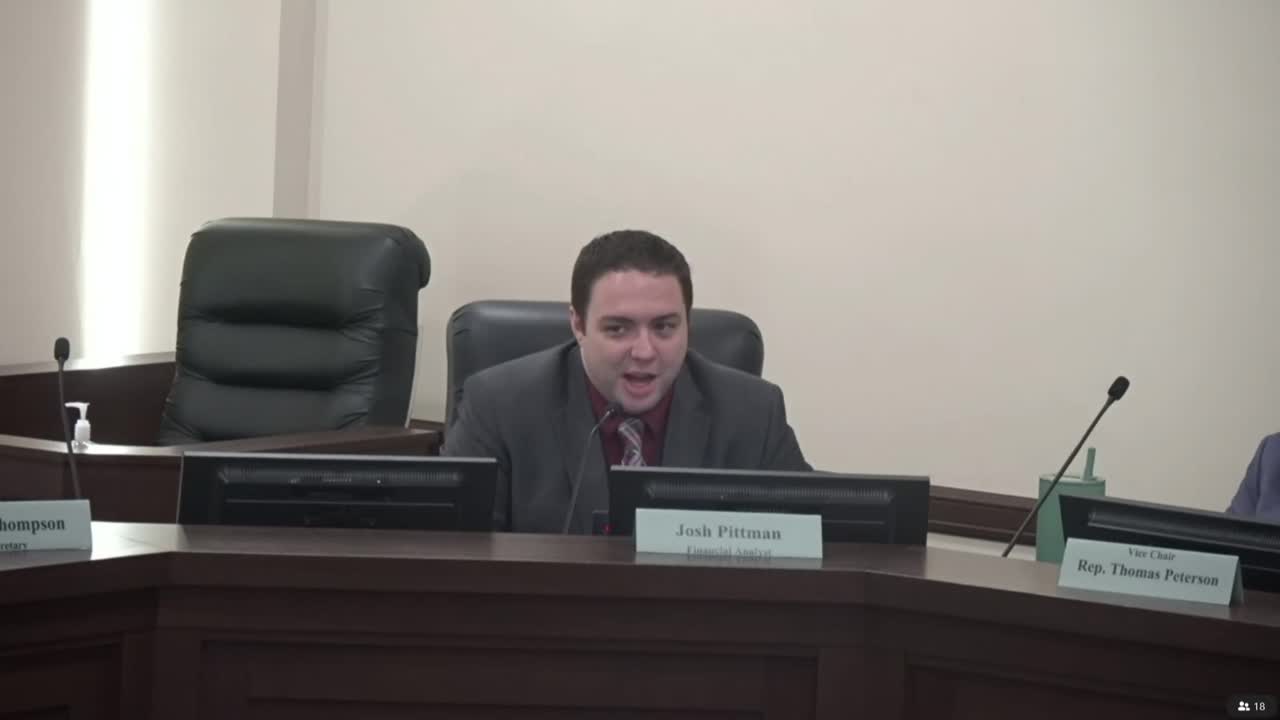
Josh (legislative fiscal analyst) told the subcommittee that TANF is a federal block grant with roughly $75,000,000 awarded annually to Utah and that some TANF funds are transferred to other programs (for example, a portion moves to the Child Care and Development Fund and to Social Services Block Grant programs). He said that after transfers and routine expenditures the department estimated about $22,500,000 in TANF funds available this year for one‑time purposes. "If you're looking to fund a $90,000,000 volleyball stadium, I'm sorry — we're not gonna be able to do that," Josh said, noting the federal rules place limits on allowable expenditures.
Nut graf: The subcommittee heard that TANF funds can be used for a range of purposes consistent with TANF’s four federal goals but that some items (notably construction and certain capital projects) are ineligible. Committee staff and agency officials said they would screen RFAs (requests for appropriation) for TANF eligibility before the subcommittee’s prioritization process.
Liz Carver, workforce development division director, and Nathan Harrison, executive finance director, described eligibility rules: TANF‑funded services tied to the program’s first two purposes generally require household eligibility (a child under 18 in the home, household income at or below 200% of the federal poverty level, and U.S. citizenship or eligible non‑citizen status). Harrison and Carver said certain basic needs (housing, food, clothing) are limited to short‑term (up to four months) emergency assistance but that childcare and transportation can be provided for longer when families are employed. Carver said an average cash‑assistance household the department serves is three people and that 200% of the federal poverty level equates to roughly $53,000 annually (figure changes each year).
Kevin Burt of DWS described a motion in the committee packet that would authorize DWS to use any unobligated TANF reserve at the end of the session to increase TANF‑eligible childcare subsidies. He said childcare costs have risen, diminishing the purchasing power of subsidy dollars; DWS estimates its subsidy rates now cover provider prices roughly half the time whereas federal guidance recommends a 75th‑percentile coverage. The motion would allow the department to use year‑end TANF balances to improve affordability for TANF‑eligible households; the department cautioned compliance adjustments would be required because TANF eligibility rules differ from the current childcare subsidy rules.
Committee members asked about the practical effects on clients who attempt to increase earnings. Carver said many benefits are scaled and taper as income increases; DWS provides employment counseling, training and other supports intended to help families increase earnings without sudden benefit cliffs.
Ending: The subcommittee did not vote on the TANF childcare motion during the briefing; members asked staff to continue screening RFAs for TANF eligibility and to include TANF‑eligible items in appropriations prioritization materials.