Get Full Government Meeting Transcripts, Videos, & Alerts Forever!
Get email alerts on the Archives Records Management topic
No spam. Unsubscribe anytime.
State archivist warns microfilm supply disappearing, urges move to electronic preservation
Summary
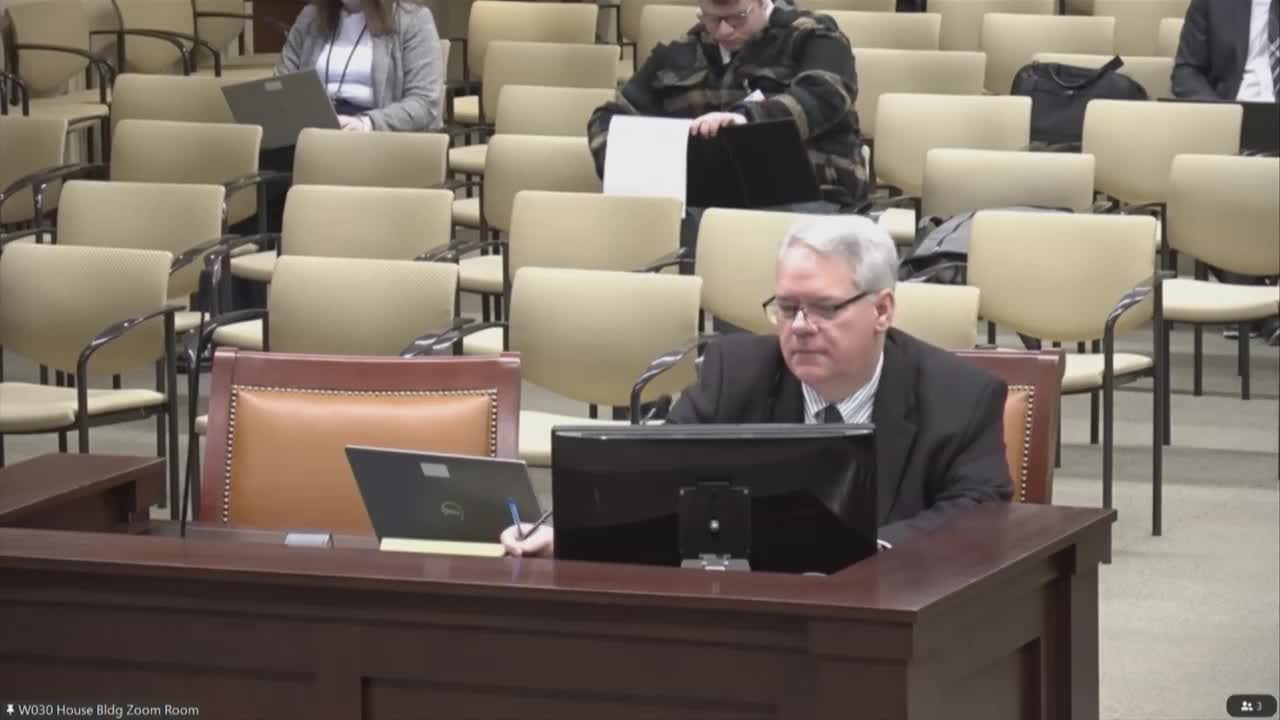
Ken Williams, director of the State Archives and Records Service, told the General Government Appropriations Subcommittee that microfilm supplies are disappearing and the agency is preparing to shift preservation work to electronic systems.
Ken Williams, director of the State Archives and Records Service, told the General Government Appropriations Subcommittee that the state is transitioning away from microfilm because suppliers are vanishing and the archives is moving to electronic preservation.
"We are quickly coming to the end of life for microfilm," Williams said, adding that the agency is down to a single vendor for film and is preparing a planned transition "to the electronic world."
The archives provides records-management and archival standards for state and local government and runs a records center in Clearfield at the Freeport Center that Williams said holds about 185,000 cubic feet of records. The permanent archives building is located in downtown Salt Lake near the Rio Grande building, and the agency offers consultation, certification and training for local records officers and agencies.
Williams described services the division operates: statewide retention-schedule review by the state records committee, a microphotography reformatting lab that has historically produced microfilm, reformatting services, management of the public notice website and the open records portal, and a state historical records advisory board that awards federal grant money to small local heritage organizations.
Why it matters: Microfilm has long been considered a stable preservation format; the archives can often read film directly so long as it is stored properly. But Williams said the supply chain and market for microfilm are shrinking and the archives must shift to digital preservation standards. That migration will require new workflows, duplication strategies and funding for secure, redundant electronic storage.
Williams told the committee the archives is already working on standards and practices for ingesting electronic records and preserving them redundantly, including off-site copies and byte-level verification. "When we receive electronic records then they are bagged and we know how many bytes there are ... and then that's duplicated and kept on secure, off-site servers," he said.
Committee members asked for follow-up metrics and details. One committee member asked for the archives' performance metrics and for numeric evidence of progress; Williams pointed to legislative performance measures that include certification of records officers and microfilm reformatting quality and quantity and agreed to provide the committee with numeric reports later.
Williams also invited committee members to visit the archives' modern facility and the robotic retrieval system housing the state's permanent collection.
Ending: Williams said the archives will return to the Legislature as it retires the microfilm preservation service and reallocates funding toward electronic preservation, and that the department will present funding options and metrics when the costs and workflows are better defined.