Get Full Government Meeting Transcripts, Videos, & Alerts Forever!
Get email alerts on the Regional Education Service Agencies topic
No spam. Unsubscribe anytime.
Subcommittee reviews regional service agencies; RESAs describe economies of scale and rural services
Summary
The committee heard that four RESAs provide shared services for rural districts, including technology repairs, mental-health screening contracts and special-education supports; agencies reported local matching and 1:1 local effort.
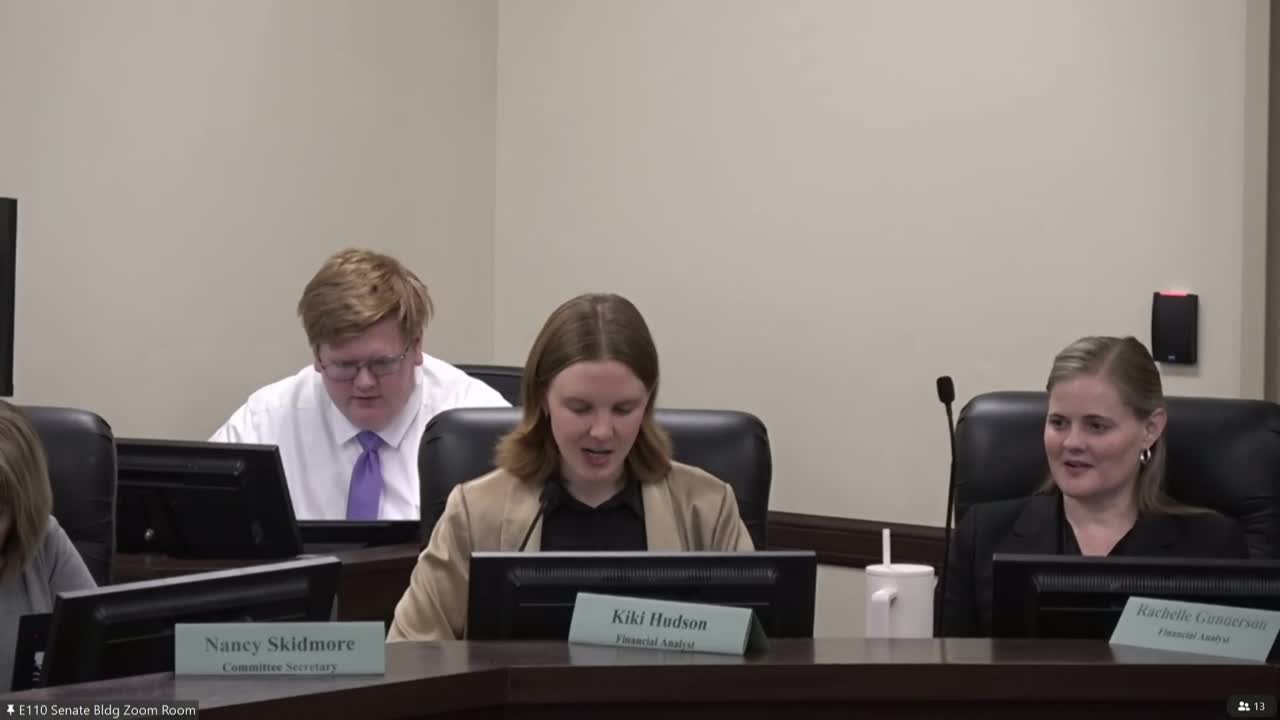
Legislative staff briefed the Public Education Appropriations Subcommittee on regional education service agencies (RESAs) and representatives from those agencies described services that extend capacity in rural Utah.
Kiki Hudson of the Legislative Fiscal Analyst's Office said the four RESAs' Central Utah Education Services (CUES), Northeastern Utah Educational Services (NEWS), Southwest Educational Development Center (SEDC) and Southeast Education Service Center (SESC) 'serve dozens of mostly rural districts and charter schools and receive about $2.1 million each fiscal year from the income tax fund.
Piute County Superintendent Kobe Willis and Joby Wright, executive director of SEDC, told the committee the RESAs provide economies of scale for services that single rural districts cannot justify on their own. Willis used equipment repair as an example: several small districts pool resources to fund an Apple repair technician who serves the region. Wright described coordinated services including professional development, technology support, student programs, media resources, administrative coordination, collective purchasing for mental-health evaluations and regional work on physical school safety.
The presenters said audits of FY24 show the regional centers are achieving a 1:1 local match for LFA funding: local LEAs contributed one dollar for every dollar the legislature provided. They emphasized that the RESAs' work is intended to equalize access for rural students to services available in larger districts.
Why it matters: RESAs channel state funds into shared services that might otherwise be unavailable in small or remote districts, from special-education evaluations to STEM kits and school-safety coordination. Presenters said demonstrated local matching increases the effective value of the appropriation.
Next steps: Presenters noted this was a line-item review and that there were no new funding requests from RESAs this year.