Get Full Government Meeting Transcripts, Videos, & Alerts Forever!
Get email alerts on the Council Procedures Late Filing topic
No spam. Unsubscribe anytime.
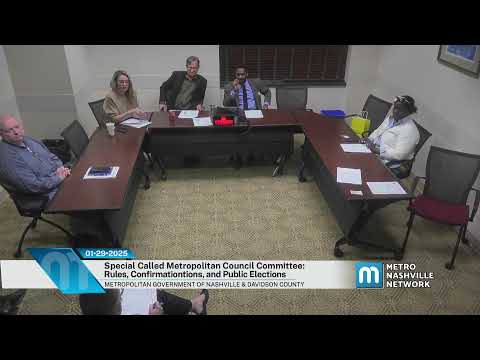
Committee debates late‑filing rule for nonbinding resolutions, discusses use of proclamations
Summary
Members of the Rules, Confirmations & Public Elections Committee debated whether to allow late filing of nonbinding (memorializing/honorary) resolutions, discussed the role of proclamations and recommended procedural fixes such as improved Legistar provenance and limits on late filings.
Council Member Coop proposed removing a blanket prohibition on late‑filed nonbinding resolutions so sponsors could submit a resolution on short notice and let the body decide whether to accept it.
The change would align nonbinding resolutions with other late‑filed legislation that can proceed only if the council suspends its rules. "Non binding resolutions are a important part of our body," Coop said, arguing that the body sometimes needs to send timely messages on events that occur between deadlines.
Why it matters: committee members said the rule balances two competing goals — responsiveness and efficiency. Vice Mayor and several council members recalled prior terms when many late‑filed items repeatedly lengthened meetings. One member summarized that allowing routine late filing had led to frequent agenda creep in the past and pushed other business back.
Key details discussed: several members suggested limiting abuse while preserving the ability to respond to urgent events (for example a school shooting or a high‑profile death). Suggestions included: (1) keeping a one nonbinding resolution per member per meeting limit; (2) allowing a small, defined number of emergency late filings per sponsor; or (3) requiring the rules committee to consider a sponsor's request to defer or accept a late filing rather than a blanket prohibition.
Proclamations vs. resolutions: committee members and staff debated moving memorializing/honorary items to proclamations, which have no late‑filing deadline under current practice. Council Member Johnson noted proclamations do not require the same timing and are already printable and searchable. Special Counsel Darby explained existing limits on announcements and presentations during meetings: "There are 2 presentations and proclamations allowed per meeting, per announcements period and they have to be 5 minutes or less," Darby said, adding there are calendar‑year limits on some presentation slots.
Clerk/Legistar staff told the committee Legistar can host a dedicated proclamation section and that the office retains both digital and printed archival records; staff said they could add proclamations to Legistar and print them for the hard archive if the council directs it.
Remaining questions and next steps: members asked whether using proclamations would remove the opportunity for full‑council spoken recognitions that sponsors value. Some argued that a proclamation can be circulated for sign‑on and still create a published record; others said a formal resolution creates a fuller opportunity for the body to speak on the record. Several members proposed a small working group or follow‑up meeting to craft specific language (for example, enumerating what qualifies as an "emergency" late filing and whether a sponsor must demonstrate exigent circumstances).