Get Full Government Meeting Transcripts, Videos, & Alerts Forever!
Get email alerts on the School Finance Audit topic
No spam. Unsubscribe anytime.
Auditors report Winslow Township School District had operating surplus; single food-service compliance finding noted
Summary
External auditors presented the district's 2023-24 financial statements and noted a $3.6 million operating surplus, large capital-reserve movements and one audit finding: the food-service fund exceeded the Department of Agriculture's three-month cash limit by about $450,000.
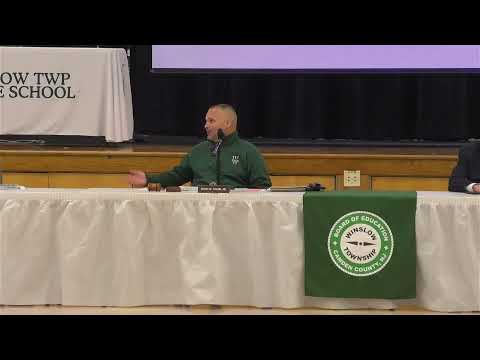
Boeing Company auditors presented the Winslow Township School District's audit for the year ended June 30, 2024, to the Board of Education on Jan. 29, saying the financial statements and required reports were submitted to the New Jersey Department of Education before the Jan. 15 filing deadline.
The audit presentation showed the district had an operating surplus of approximately $3,600,000 and reported extensive capital-reserve activity: a $14,000,000 withdrawal from capital reserve for projects during the year, a June transfer into capital reserve of $15,000,000, and $1,900,000 moved back into capital reserve from completed capital projects. The net result increased the district's capital reserve by about $2,500,000, the auditors said.
The auditors also reported that the district used roughly $5,900,000 of prior-year fund balance to support the 2023-24 budget and that federal and state grants received and expended totaled about $15,500,000, driven in part by the closeout of ARP/ESSER COVID grant funding. Total general fund fund balance at June 30, 2024, was reported at about $55,000,000; most of that amount was restricted or designated for the 2024-25 or 2025-26 budgets, the auditors said.
The audit team issued three auditors' reports covering the financial statements and related notes and reported an unmodified (clean) opinion on the district's major grant compliance. In the report on internal control and compliance over financial reporting the auditors recorded one finding related to the district's food-service (full-service) fund. "The full service fund net cash resources exceeded its three months average expenditure by $450,000," the auditors said, citing the New Jersey Department of Agriculture calculation used for compliance.
Board members asked how the district could reduce the food-service cash balance to avoid repeating the finding. The auditors and district staff discussed permissible spending avenues, such as facility upgrades or equipment purchases for cafeterias, but cautioned that public contract and bidding rules limit how quickly funds can be spent. The auditors noted that higher federal reimbursement rates during COVID contributed to the accumulation of cash in many districts and that the regulatory formula has not been revisited, which has led to similar findings elsewhere.
The auditors pointed to page 79 of the audit report for the fund-balance snapshot and to page 165 for the finding. They said there were no unrecorded audit adjustments and that the business office provided full cooperation during fieldwork.
No formal board action was taken on the audit itself; it was presented for review and placed on record for public access through the NJDOE and the district, the auditors said.
Ending: The board scheduled no immediate vote on corrective spending and staff said they will continue to evaluate compliant ways to spend cafeteria funds, following public-contract law and bidding requirements. The district will maintain the corrective actions discussed with auditors and monitor the food-service fund balance in future months.