Get Full Government Meeting Transcripts, Videos, & Alerts Forever!
Get email alerts on the Open Government topic
No spam. Unsubscribe anytime.
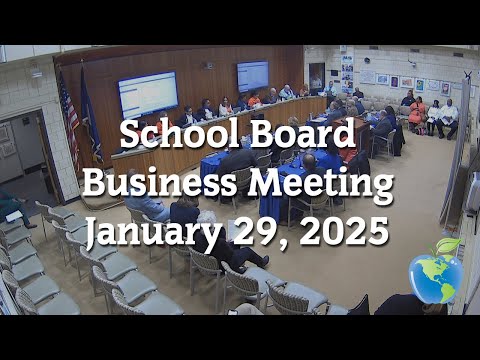
Norfolk school board holds FOIA and ethics training for members
Summary
Assistant City Attorney Margaret Kelly briefed Norfolk School Board members on Virginia's Freedom of Information Act and Conflict of Interest Act, covering meeting notice rules, public-records obligations, closed-session procedures, and gift/recusal limits; the board's FOIA officer was identified as the public point of contact.
Assistant City Attorney Margaret Kelly led a training session for the Norfolk School Board on the Virginia Freedom of Information Act and the Conflict of Interest Act, emphasizing that public bodies and their records generally must be open to the public.
Kelly told the board that FOIA’s starting assumption is openness and that the statute must be “interpreted liberally.” She said public meetings generally occur when three or more members of a public body gather and that schools must post notice of such meetings at least three working days before the meeting at three locations, including the official government website. Kelly noted that meetings may be physical or electronic, that recording is allowed, and that the school board may permit limited individual remote participation under its policy but cannot hold a fully electronic meeting for the full board.
Why this matters: FOIA sets timelines and procedures the board must follow for meeting notices, closed sessions, and public-records requests, and violations can trigger penalties or court actions.
Kelly outlined public-records procedures: requests may be oral or written and must be answered within five working days (with a seven‑working‑day extension available when needed). She said custodians must locate records and that the division’s FOIA officer — identified in the training as the division’s freedom-of-information officer, Mr. Walker — is the public point of contact and assists with routing requests to the appropriate custodians. Kelly warned that responses that withhold or redact records must cite the legal exemption authorizing the withholding and describe the approximate volume and subject of withheld material.
On closed meetings, Kelly reviewed the statutory procedure: a board must take an affirmative recorded vote in open session to enter a closed session and must state the purpose and the code section authorizing the exception. She reminded members that actions emerging from a closed meeting (resolutions, contracts, etc.) must be approved in an open meeting with substance reasonably identified before they become effective.
Kelly also summarized the Conflict of Interest Act training requirements: local officials must complete COIA training within two months of assuming office and again at least once every two years. She described prohibited conduct — including soliciting or accepting things of value intended to influence official duties, certain personal interests in contracts, and limits on gifts — and the reporting/disclosure processes. Kelly said criminal and civil penalties apply for knowing COIA violations and that the statute allows forfeiture and other remedies.
Kelly advised board members to contact the division FOIA officer for specific records or to consult the office of the city attorney for drafting required motions when the board needs to move into closed session. She also noted a recent change she said affects FOIA and FERPA overlap: records a parent would be entitled to under FERPA generally cannot be charged for under FOIA.