Get Full Government Meeting Transcripts, Videos, & Alerts Forever!
Get email alerts on the Housing Affordability topic
No spam. Unsubscribe anytime.
Committee advances SB 23 after technical fixes to First Home Investment Zone tool
Summary
The House Political Subdivisions Committee recommended favorably a first substitute to SB 23, which makes technical and definitional fixes to the First Home Investment Zone tool and sets owner‑occupancy and developable‑area rules intended to increase owner‑occupied housing.
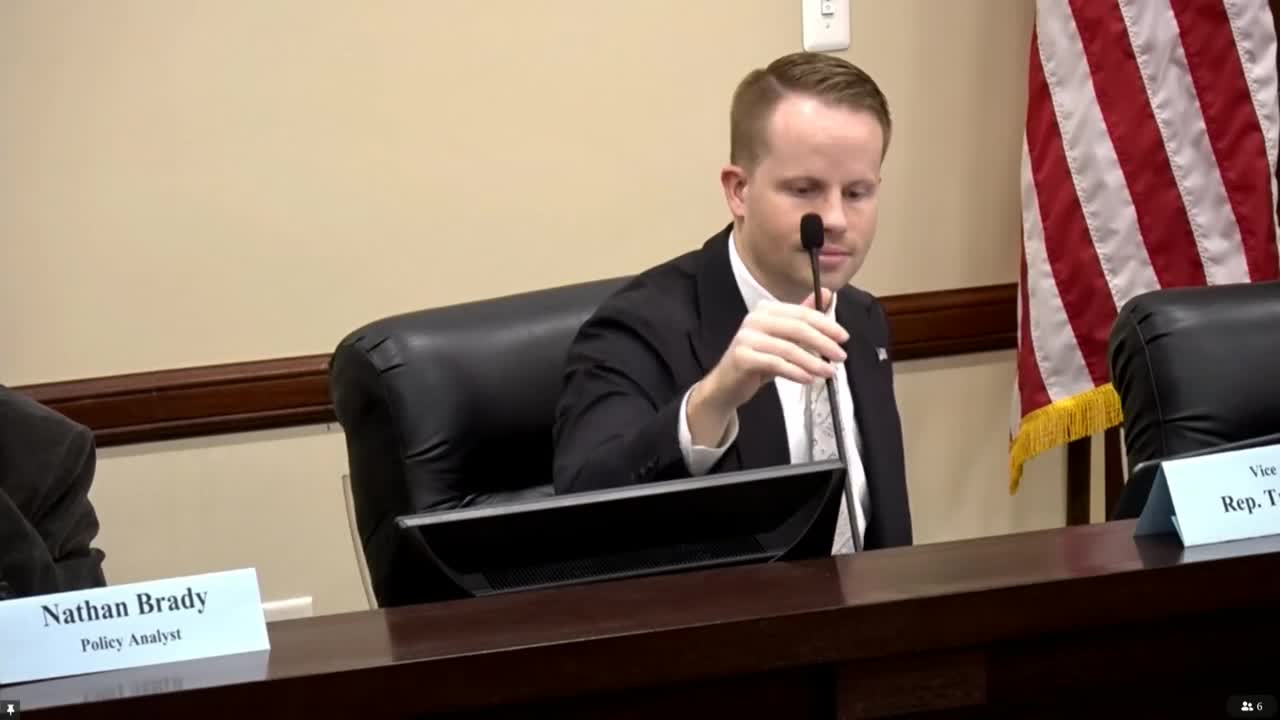
The Utah House Political Subdivisions Committee recommended favorably the first substitute to SB 23, the First Home Investment Zone amendments, after the sponsor and multiple stakeholders described the measure as a technical fix that restores the bill’s original intent.
Sen. Harper, sponsor of SB 23, told the committee the “first home investment zone” is intended to allow a community to “create an area around an intersection or around a transit improvement…put a little bit of higher density there and then shift some of that density to another area within the community for first homes,” and that the substitute corrects drafting errors that prevented implementation.
The substitute modifies how the bill measures developable area, clarifies parcel descriptions and titles, and corrects mathematical formulas used to calculate density. Sen. Harper said the language now requires that 50% of homes in a designated owner‑occupied portion of a zone must be owner occupied, and that half of those owner‑occupied homes “must be restricted for 25 years to owner occupied.” He told the committee the change will exclude nonbuildable features such as parks and roads when calculating developable acreage.
Public commenters and stakeholders voiced support and questions. Andrew Gruber, executive director of the Wasatch Front Regional Council, called the change “a relatively simple fix” and said the council supports the sponsor’s adjustments. Carson Eilers of the Utah League of Cities and Towns said the substitute will allow municipalities to implement a tool passed last year and called it “a tool in the toolbox.” Kate Klune of the Utah Association of Realtors said the measure is one tool to address affordable housing.
At the same time, some public commenters pressed the committee for clarity about who benefits and how density is calculated. Suzanne Hansen of Layton asked whether the bill shifts authority to counties by changing references from a “municipal statistical area” to county or metropolitan statistical area definitions and questioned whether the measure would favor developers because of how acreage is counted. Sen. Harper responded that “municipal statistical area is not defined in code or in federal law. So we went to one of the terms that is actually quantifiable that you can point to in code.”
Representative Walter moved adoption of the first substitute; the committee approved the recommendation by voice vote. The committee record shows the substitute’s title and body were deleted and replaced with the first substitute language described in the hearing. The committee did not record a roll‑call tally in the transcript.
The committee’s favorable recommendation sends the first substitute to the next legislative stage for floor consideration.