Get Full Government Meeting Transcripts, Videos, & Alerts Forever!
Get email alerts on the Guardianship Evaluators topic
No spam. Unsubscribe anytime.
House panel advances bill expanding who may evaluate adults for guardianship and conservatorship
Summary
The House Judiciary Committee voted to advance House Bill 36, which would expand the list of licensed professionals who may perform probate-court evaluations used in guardianship and conservatorship proceedings.
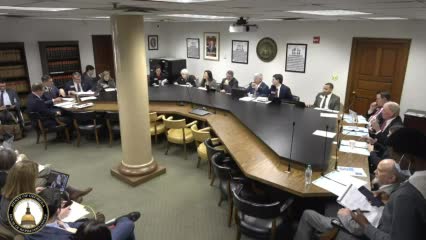
The House Judiciary Committee advanced House Bill 36 after extensive testimony from probate judges, disability advocates and professional licensing groups about who should be qualified to perform court-ordered evaluations in guardianship and conservatorship proceedings.
The bill’s sponsor told the committee the measure expands the list of professionals who may provide capacity evaluations in probate court to include physician assistants, nurse practitioners and clinical nurse specialists in psychiatric and mental health, licensed professional counselors and licensed marriage and family therapists. "We're trying to provide a process that will relieve some of that pressure," the sponsor said, noting courts sometimes cannot find evaluators and cases can languish.
Supporters — including the Probate Judges Council and representatives of licensed professional counselors and advanced practice nurses — said the current list (physicians, psychologists and licensed clinical social workers) is too small in some counties and that expanding the pool will speed evaluations and protect due process by ensuring an independent evaluation can be completed within statutory timelines. Judge Kristen Polin, an associate judge in Cobb County, said probate courts regularly must appoint a neutral evaluator within 72 hours for emergency petitions and that smaller and rural counties often lack available doctors or psychologists. "This is just kind of expanding our tool to be able to do our statutory duty under the code," Polin said.
Opponents — including self-advocates and members of the developmental-disabilities community — said the added professions do not necessarily have specialized training to assess cognitive or functional capacity in people with intellectual and developmental disabilities and warned the change could increase inappropriate or unnecessary guardianships. "Supported decision making should always be the first consideration before guardianship," said Sheila Jeffrey, who testified in opposition. Jessica Cowell of the Georgia Council on Developmental Disabilities urged the committee to prioritize alternatives to guardianship and to ensure rigorous training for any evaluators.
Professional groups testified in support. Elizabeth Apley of the Georgia Association for Marriage and Family Therapy told lawmakers licensed marriage and family therapists have graduate training, postgraduate clinical experience and a national licensing exam; she said MFTs and other licensed mental-health professionals are regulated by the same state boards that oversee similar practitioners. Robin Pinkston, a family nurse practitioner and director of government relations for the United Advanced Practice Registered Nurses of Georgia, described competency and functional assessment as routine practice for advanced practice nurses working with older adults.
Committee members asked how the bill’s language treats settlements and conservatorship financial limits; one member sought clarity on the definition of "structured settlement" and whether portions allocated to annuities would count toward the statutory dollar threshold for a conservator to settle claims. The sponsor said the language aligns with prior changes to minor-settlement law and agreed to review wording concerns.
Judge Polin and others described court safeguards already in place: petitioners must present evidence, courts appoint independent evaluators (a separate third-party evaluation is ordered after an initial probable-cause review), proposed wards are served and, if they lack counsel within 48 hours, courts appoint attorneys to represent the proposed ward; at hearing the petitioner bears the burden of proof by clear and convincing evidence. Polin said probate courts also may limit the scope of a guardianship and aim to remove only the rights necessary for the individual's needs.
After extended debate and multiple questions from members, the committee voted to advance House Bill 36. The vote was taken by voice; a committee member recorded a no vote on the record during closing remarks but no roll-call tally was reported in the transcript.
What this does and does not do: The bill would expand which licensed professionals may conduct evaluations required by probate courts. It does not change the statutory standard for imposing guardianship or conservatorship; courts still hold hearings, appoint counsel for proposed wards in emergency and nonemergency cases when needed, and may limit the scope of any guardianship order.