Get Full Government Meeting Transcripts, Videos, & Alerts Forever!
Get email alerts on the Public Safety Police topic
No spam. Unsubscribe anytime.
Huntersville police report drop in overall crime but rising traffic collisions; propose civilian crash investigators and staffing changes
Summary
Chief Graham told the town board that part‑1 crimes were lower than recent years while traffic crashes have climbed; the department proposed civilian traffic crash investigators, a night shift pay differential, more victim advocates and additional school resource officers, and warned police space and evidence storage are at capacity.
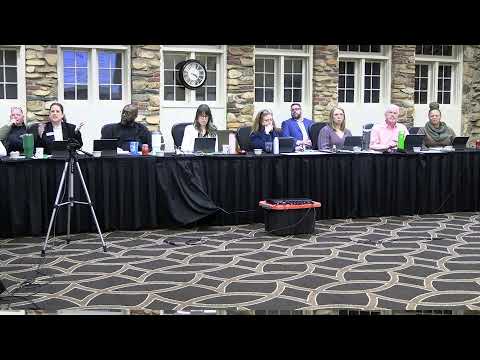
Chief Graham, head of the Huntersville Police Department, told the town board that the department’s total Part‑1 crimes were lower than last year while traffic collisions have risen sharply, and he outlined a package of proposals to address staffing, traffic response and space constraints. "Traffic is a huge, thing that we have to deal with," Chief Graham said during the update.
Graham said the department recorded 874 Part‑1 crimes over the previous year and said Part‑2 crime counts fell and remain below the five‑year average. The department made 404 arrests and reported 83 DUIs. Calls for service were roughly steady year‑over‑year, with officer‑initiated activity up slightly and 911 calls slightly down. By contrast, traffic crashes have trended up since 2020: Graham said crashes are 44.25% higher than 2020, about 3% higher than the prior year, and encouraged a focus on traffic enforcement and crash clearance as a priority.
The department is pressing the court system to place a magistrate office on Huntersville’s north side to reduce long trips downtown for residents and officers; Graham said he and the department have met with judges but are waiting on hiring decisions at the courts. He told the board the town has an interior space identified for a magistrate office but that the effort is stalled by magistrate hiring challenges outside the town’s control.
To address staffing shortages, Graham presented several personnel proposals. He asked the board to consider a night‑shift differential — a fixed hourly supplement for employees assigned to a permanent night shift — and provided examples of neighboring agencies that pay $1–$2 per hour for night shifts. The chief said the town’s recruiting pipeline has thinned and that shift compensation could help both retain and attract officers.
Graham also proposed creating a civilian traffic crash investigator unit. Under the plan, the department would hire four civilian investigators to handle property‑damage‑only crashes, scene documentation and certain parking and local ordinance enforcement. Graham said roughly 80% of the town’s crashes are property‑damage only and that an average crash scene currently keeps officers on scene about an hour. He added civilian investigators would be restricted from handling injury or criminal cases and would be trained in‑house through the Justice Academy program, followed by four weeks of supervised field mentoring.
On victim services, Graham said the department currently has three advocates and a supervisor, with one advocate starting soon. He reported 365 requests for assistance in 11 months and credited the victim response team with helping secure hospital care and protective orders for severe domestic assault cases. Graham urged planning for a fourth advocate to reduce delays and expand on‑scene response and community outreach.
The chief recommended expanding school resource coverage at elementary schools: instead of placing an officer at every elementary school, the proposed model assigns one officer to two schools and evaluates after a year. He said the town would prioritize hiring officers already SRO‑certified to fill those positions.
Graham also described mounting space and evidence storage problems at the police facility. He said the department has roughly 116 sworn positions and 22 civilian positions budgeted in 2025 but that the current building (acquired and adapted from a previous doctor’s office) is landlocked and cannot be expanded on site. Evidence storage is already full; the department rents two off‑site storage units and is stacking boxes in department space. Graham asked the board to support a short‑term leased location and a near‑term space needs analysis to guide a longer‑term facility solution.
On equipment and scene safety, Graham urged the town to consider anti‑vehicle barrier systems for large public events and additional license‑plate‑reading cameras (so‑called Flock cameras) around town. He said the department currently operates licensed plate readers in Birkdale and other nodes and reported roughly 1,100,000 tag reads a month with 781,000 unique vehicles; the system generates alerts when a tagged vehicle is on a hot list (warrants, stolen plates, protection orders). Graham said other North Carolina cities have piloted or legislated civilian crash investigator programs and that Wilmington’s pilot ultimately was authorized by the North Carolina General Assembly in 2023.
Graham summarized recruitment outcomes with candor: the department lost officers to neighboring agencies (four to Mooresville and others to county or ABC agencies), and many departures came from officers with fewer than three years of service. Exit interviews cited court processing, magistrate and detention issues and the pace/expectations of patrol work as contributing factors. Graham said the town’s recent pay adjustments improved competitiveness but that recruiting remains a multi‑pronged challenge.
The chief closed by asking the board to consider funding the short‑term items (recruiting incentives, civilian investigators, more victim advocates and equipment) and to authorize a space needs assessment to identify an appropriate long‑term facility solution. "We've got to start finding some space for PD within the next year or two," he said.
Ending: The presentation set out a sequence of near‑term requests (shift differential consideration, four civilian crash investigators, a fourth victim advocate, and a space‑needs analysis) and longer‑term facility and capital asks for future budget cycles. The board did not take immediate votes on these requests during the update; further budget and CIP proposals were signaled for upcoming meetings.