Get Full Government Meeting Transcripts, Videos, & Alerts Forever!
Get email alerts on the Dhs Fostercare Deficit topic
No spam. Unsubscribe anytime.
DHS outlines foster‑care cost pressures: $44M state shortfall, QRTP pilot and D‑SNAP totals
Summary
DHS Commissioner Candace Bross told the committee the department faces a $44 million FY25 deficit in state funds for out‑of‑home foster care driven by more children with complex needs and federal funding limits; she also summarized Hurricane Helene D‑SNAP benefits and a new qualified residential treatment program pilot.
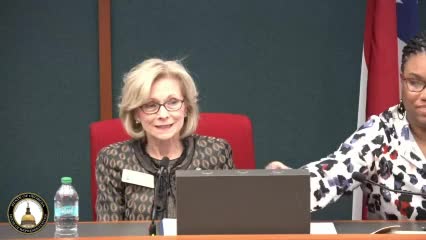
Candace Bross, commissioner of the Georgia Department of Human Services and director of the Division of Family and Children Services (DFCS), gave a lengthy overview of agency accomplishments and FY25 amended requests, highlighting a $44 million state‑funding deficit for out‑of‑home foster care and several program responses.
Bross said a combination of more children entering custody with complex behavioral and mental health needs, limits in federal funding (including Title IV‑E formula quirks and recent federal changes), and provider capacity pressures produced a forecasted $44 million deficit in state funds for foster care in amended FY25. “After we submitted our projections for out of home care based on f y 24 expenditures, We realized a $44,000,000 deficit in state funds,” she told the committee.
The department described steps to reduce hoteling — placing foster children temporarily in hotels or offices — noting the count fell from 1,007 children in 2022 to 235 in 2024, and the daily average is now lower. Bross also described a pilot QRTP (qualified residential treatment program) launched with Murphy Harps in Cedartown to provide trauma‑informed out‑of‑home care for children with complex needs. She said the pilot’s first child was placed in the QRTP in the days before the hearing.
Bross summarized the disaster SNAP (D‑SNAP) response after Hurricane Helene: over four phases in 55 counties, DFCS dispersed more than $126 million in benefits to nearly 267,000 households, serving about 598,000 individuals.
She told the committee the department needs amended FY25 funding to meet foster‑care obligations and avoid cutting services or disrupting providers, noting legal and programmatic limits on how federal funds may be used. Bross also requested support for a dedicated residential licensing staff position tied to recently authorized license types (QRTP and recovery centers) under state law.
Ending: Bross closed by requesting the committee’s support for the governor’s amendments and by asking the subcommittee to consider additional state funding to address the foster‑care shortfall.