Get Full Government Meeting Transcripts, Videos, & Alerts Forever!
Get email alerts on the Collective Bargaining topic
No spam. Unsubscribe anytime.
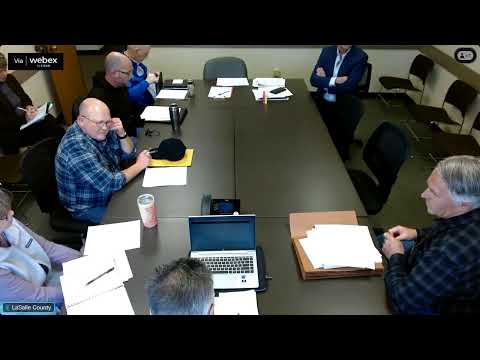
LaSalle County committee approves remote attendance and moves to executive session on collective bargaining
Summary
At its Jan. 30, 2025 meeting, the LaSalle County Salary and Labor Committee approved remote attendance for one member under a standing resolution and voted to go into executive session to discuss collective bargaining.
LaSalle County Salary and Labor Committee approved remote attendance for a committee member and moved into executive session to discuss collective bargaining during a brief Jan. 30, 2025 meeting.
The committee voted to allow remote attendance by committee member Joe Osoppinski pursuant to Resolution 23-53, with a motion, a second and an affirmative voice vote recorded during the meeting. Committee members then voted to go into executive session under the statute cited in the meeting as "ILCSS 120-2 c" to discuss collective bargaining matters.
The votes and procedural steps were led by Chair Steve Aubrey, who called the meeting to order and asked for the motions. During roll call, Tom Walsh, Joe Sypniewski (online), Tina (surname not specified), Mike McEmmary and James Baylor answered present; Kathy Bright was absent. An attendee said, "All in favor? Aye," during the remote-attendance motion; the transcript does not identify an individual speaker for that remark.
Committee business otherwise was minimal: the meeting record indicates there were no minutes available to approve at the start of the session and the principal agenda actions were the two procedural items — the remote attendance approval and the move to executive session. The committee cited Resolution 23-53 as the authority for allowing remote attendance and referenced "ILCSS 120-2 c" as the legal basis for closing the meeting to the public to discuss collective bargaining.
The committee did not provide substantive public details in the open session about the collective-bargaining topics to be discussed; executive sessions are typically closed to the public. No additional votes or outcomes on substantive bargaining items were recorded in the public transcript.