Get Full Government Meeting Transcripts, Videos, & Alerts Forever!
Get email alerts on the Education Policy topic
No spam. Unsubscribe anytime.
Senate passes bill clarifying locker-room access for coed teams and student privacy
Summary
Senate File 62, which updates rules on restroom and locker-room access in publicly funded schools and adds a narrowly tailored exception for coed athletic teams when no other suitable meeting space exists, passed the Senate after a brief amendment adding the exception.
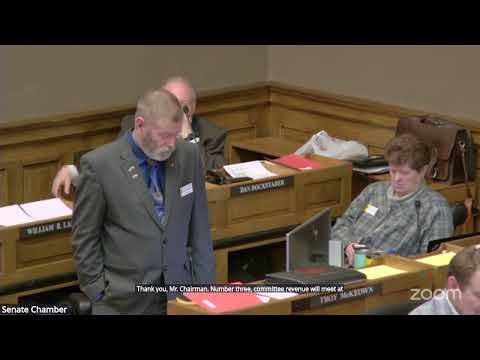
Senate File 62, a bill addressing restrooms and locker-room access in publicly funded schools, passed the Wyoming Senate on Jan. 29 after adoption of a narrow, technical amendment to cover coed athletic teams.
Senator Schuler moved 3rd-reading Amendment No. 1 to address an issue a senator raised involving a coed team that had access to only a single locker room. The amendment permits a coach of a school-sponsored athletic activity with both male and female members to enter a locker room before, during or after the activity when no suitable meeting room is available, provided all students are fully clothed. When possible, the coach is required to be accompanied by at least one additional adult who is not a high-school student; that additional adult is not required if members of both sexes are present in the locker room.
Proponents said the amendment was a straightforward fix to an unanticipated local circumstance and would provide necessary clarity for small or remote districts that may lack alternate meeting space. “This is a simple fix,” the amendment mover said on the floor. Opponents urged deference to local control but acknowledged the amendment addressed specific, practical circumstances in some districts.
The amendment was adopted, and Senate File 62 passed third reading by roll call, recorded as 27 ayes, 3 no and 1 excused. Supporters said the bill will help districts with limited facilities avoid last-minute litigation and create an operational standard that protects student privacy while allowing necessary supervision. Detractors reiterated a preference for local board control over operational details.
The Senate’s passage advances the bill; implementation and any administrative guidance will rely on district policies and any follow-up guidance from the state education agencies.