Lacey Township officials outline $92.5 million, three-question school referendum ahead of March 11 ballot
Loading...
Summary
Lacey Township School District officials on Tuesday laid out a three-question bond referendum totaling about $92.5 million that will appear on the March 11 ballot, saying the package would pay for full roof replacements at every district school, broad HVAC and related systems work, and a mix of site and facility upgrades including a turf-field complex.
Lacey Township School District officials on Tuesday laid out a three-question bond referendum totaling about $92.5 million that will appear on the March 11 ballot, saying the package would pay for full roof replacements at every district school, broad HVAC and related systems work, and a mix of site and facility upgrades including locker rooms, parking-lot repaving and a turf-field complex.
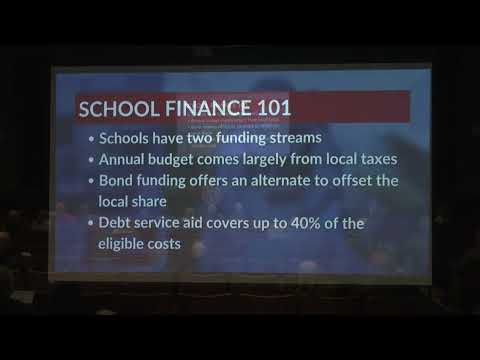
The district said roughly 40% of eligible costs would be reimbursed by New Jersey state aid if voters approve the referendum and that the first question — the roofs package — is structured to be tax-neutral for the average homeowner. Acting Superintendent William Zielinski said that if Question 1 fails, “the entire referendum fails,” and emphasized the district’s intent to present voters with separate choices on major project groups.
Why it matters: district officials said the referendum is meant to avoid repeated emergency repairs and to capture state reimbursement that would otherwise flow to other districts. The district says roofing warranties for all school buildings have expired, many HVAC units are beyond their expected life and some systems have recently failed, forcing 100% locally funded repairs.
Question details and costs Question 1: Roofs and select HVAC — just under $30 million. Officials said the plan would replace roofs on all six schools, strip down to the structural deck and install newer roofing systems with longer warranties (district and architects cited 30-year warranties; some shingle roofs may carry longer warranties). The district intends to time new debt so the cost would replace maturing debt and be tax-neutral on the debt-service portion of the property tax bill. “I will never ever ever tell any of you vote yes or no,” said Zielinski, the acting superintendent, adding the presentation was intended to inform voters.
Question 2: HVAC, plumbing and electrical — $37.9 million. The district listed replacement of prioritized, end-of-life HVAC units across buildings, wiring repairs at the middle school and plumbing items such as water heaters and pumps. Finance staff said the estimated tax impact for the average assessed home ($287,011) would be about $12 per month for 20 years if Question 2 is approved. Jennifer Edwards, the district’s financial adviser, explained that the operating budget and debt-service budget are separate and said, “The district is not permitted to do that,” when addressing a suggestion to repurpose maturing debt-service capacity for operating projects rather than issuing bonds for capital work.
Question 3: Site and facility projects — $24.5 million. The third question bundles varied projects: locker-room renovations at the high school and middle school, repaving elementary parking lots, library upgrades and lockers at Mill Pond, restroom work at Forked River, replacement of the high-school gym floor and resurfacing basketball courts and some parking areas districtwide. The most-discussed item in Question 3 is a turf-field complex behind the high school. Architects described the turf project as a multi-sport complex with exterior lighting, perimeter fencing and an underground drainage system. Jason Dubovich, an architect with FVHD, said the underground drainage and lighting are eligible for the state reimbursement while the turf “carpet” (the turf surface) is not: “The entire turf drainage system, the lighting for the turf field, all gets the full 40% funding. … The carpet does not receive any state funding.”
What happens if it fails District staff repeatedly said that, absent voter approval, the district will still have to address urgent failures but would do so without state aid and at full local cost. Zielinski described recent failures he said the district has had to repair entirely with local funds, including three HVAC units at the middle school that burst and a water heater failure at Cedar Creek. Everett Johnson, bond counsel from the law firm Walens, Goldman & Spitzer, and other presenters explained that state aid would only be paid after a successful referendum; the state does not advance the 40% share until districts submit eligible projects tied to passed bond questions.
Election mechanics and timing Officials said Question 1 must pass for Questions 2 or 3 to be carried out; Questions 2 and 3 cannot pass alone. The district plans to sell bonds competitively if voters approve the package, with bonds repaid over 20 years. Edwards noted the district is using conservative interest-rate assumptions in its voter materials and that actual market rates at issuance could be lower, which could reduce the tax impact. The district also said architects will produce a draw schedule so tax levies tied to bond issuance will phase in as projects are built rather than all at once.
Next steps and where to get information Officials closed the public presentation by inviting residents to small-group breakout sessions with architects, bond counsel and the financial adviser for detailed questions, and to consult the district’s project website and tax-impact calculator. The district posted materials and a calculator at lacyschools.org and encouraged voters to read ballot language carefully.
Ending: The presentation was informational; no formal board action or vote occurred at the meeting. The referendum will be decided by Lacey Township voters in the March 11 election.