Get Full Government Meeting Transcripts, Videos, & Alerts Forever!
Get email alerts on the Judicial Resentencing topic
No spam. Unsubscribe anytime.
Community Safety Committee hears divided testimony on bill to expand judicial resentencing discretion
Summary
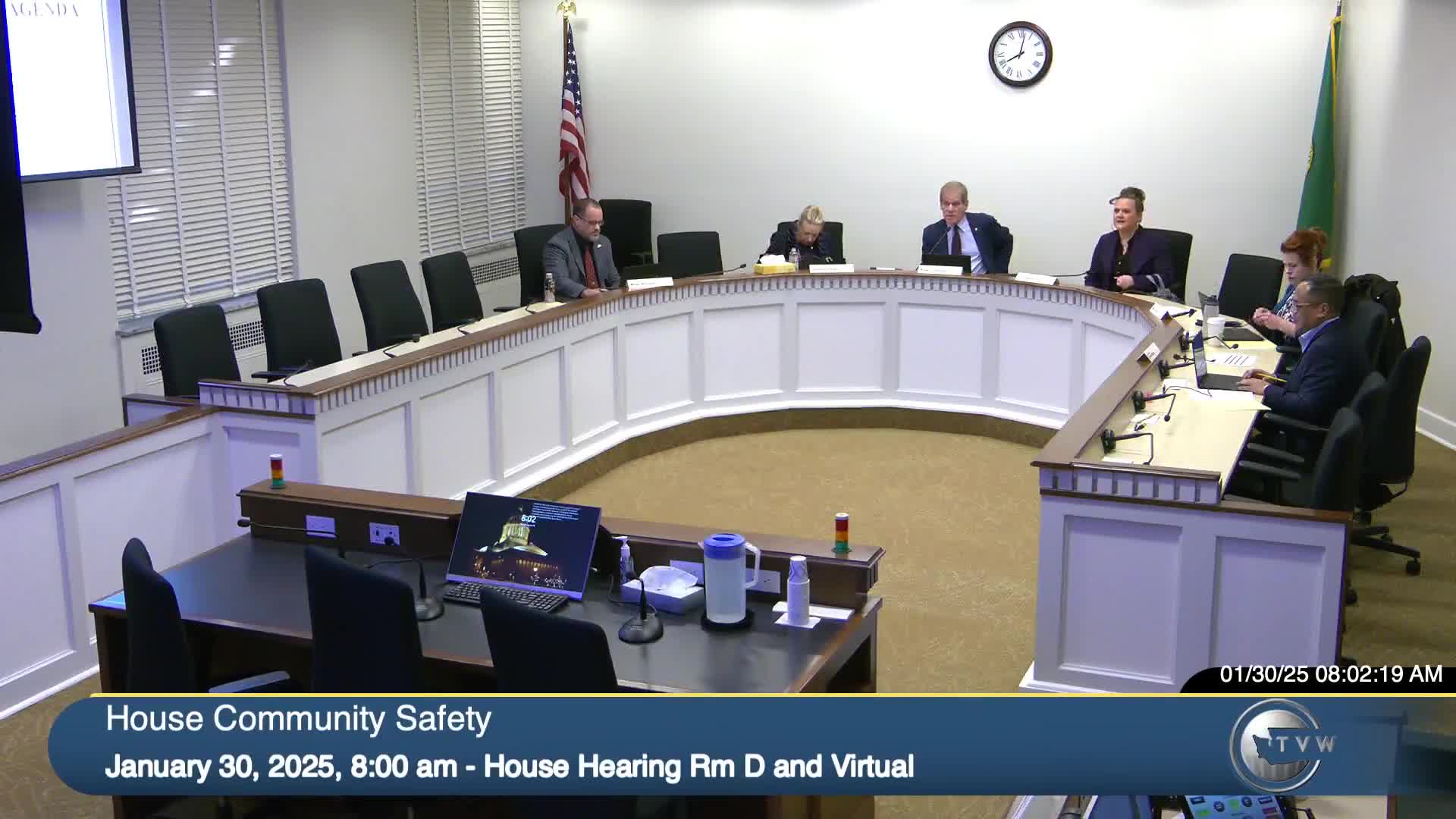
The House Community Safety Committee heard testimony Jan. 30 on House Bill 1125, the Judicial Discretion Act, which would broaden judicial authority to consider resentencing petitions for people serving long terms.
The House Community Safety Committee heard testimony Jan. 30 on House Bill 1125, the Judicial Discretion Act, which would broaden judicial authority to consider resentencing petitions for people serving long terms. The committee allotted about 30 minutes for continuation of the public hearing and limited speakers to two minutes each.
Supporters said the bill would allow judges to weigh rehabilitation and survivors' perspectives; opponents warned the proposal could retraumatize victims and strain already overworked prosecutors' offices. Annie Nickel, who identified herself as a member of Scribe Survivors for Safety and Justice, told the committee her family’s loss shaped her view: “The JDA puts us on that path,” Nickel said, describing a shift from “mass punishment” toward “prevention over mass punishment.”
The bill’s backers included former victims, victim-advocacy organizations and people who served long sentences. Kim Gordon, a former public defender who testified for several organizations, argued the current resentencing process is opaque and places sole discretion with prosecutors: “It moves decisions that currently occur in the dark out into the light,” Gordon said, urging judicial review to increase transparency. Aswad Thomas, vice president of the Alliance for Safety and Justice and national director of Scribe Survivors for Safety and Justice, said a 2024 Alliance survey finds many victims prefer rehabilitation-focused responses: by “nearly a 2 to 1 margin, victims prefer the justice focused more on rehabilitation,” Thomas said, and asked the committee to pass the bill.
Opposition testimony came from prosecutors’ representatives and victim advocates who said resentencing reviews can reopen wounds and divert scarce prosecutorial resources. Russ Brown, speaking for prosecutors, warned that mandating resentencing reviews would require prosecutors to revisit many old files and could delay present-day casework: “By ordering individuals to be resentenced, what you are saying is you are putting the priority of individuals who committed harm in their communities many years ago above the victims who today are unable to receive any sense of justice,” Brown said. Tiffany Atrill, a former victim advocate, described the effect of resentencing on families who must relive the original crimes: “I have seen firsthand the retraumatization that it causes,” she said, reading a family’s account of having to relive their loss after a resentencing.
Others who testified described personal experience with long sentences and rehabilitation. Jacob Ivan Schmidt, director of Justice Solutions and a recipient of a prior resentencing, said he and several others granted resentencing had not recidivated and described judicial review as a careful, case-by-case process. Anthony Powers, who said he became a mentor and educator after incarceration, urged judges be allowed “to review things” and cited his own path to rehabilitation.
Committee members asked witnesses about practical effects and safeguards. Representative Davis and others pressed prosecutors’ witnesses on whether victims’ views are monolithic; several witnesses acknowledged victims have diverse perspectives. Committee staff reminded those not called to testify that written comments would be accepted.
The public hearing on HB 1125 closed after the allotted time; the committee moved to an executive session to consider other bills. No committee vote on HB 1125 occurred during the Jan. 30 meeting. Committee members said they will continue to receive written comments and may weigh possible amendments that would add victim supports, clarify standards for judicial review, or limit eligibility.
The committee’s hearing record remains open for written submissions, and witnesses who were not called were told they have one day to submit written comments.