Get Full Government Meeting Transcripts, Videos, & Alerts Forever!
Get email alerts on the Textiles topic
No spam. Unsubscribe anytime.
Committee hears bill to require producer-run program for post-consumer textiles
Summary
A state House committee heard House Bill 1420, which would require textile and apparel producers to form a producer responsibility organization to manage post-consumer textiles, set collection and convenience standards, fund education and audits, and register with the Washington Department of Ecology.
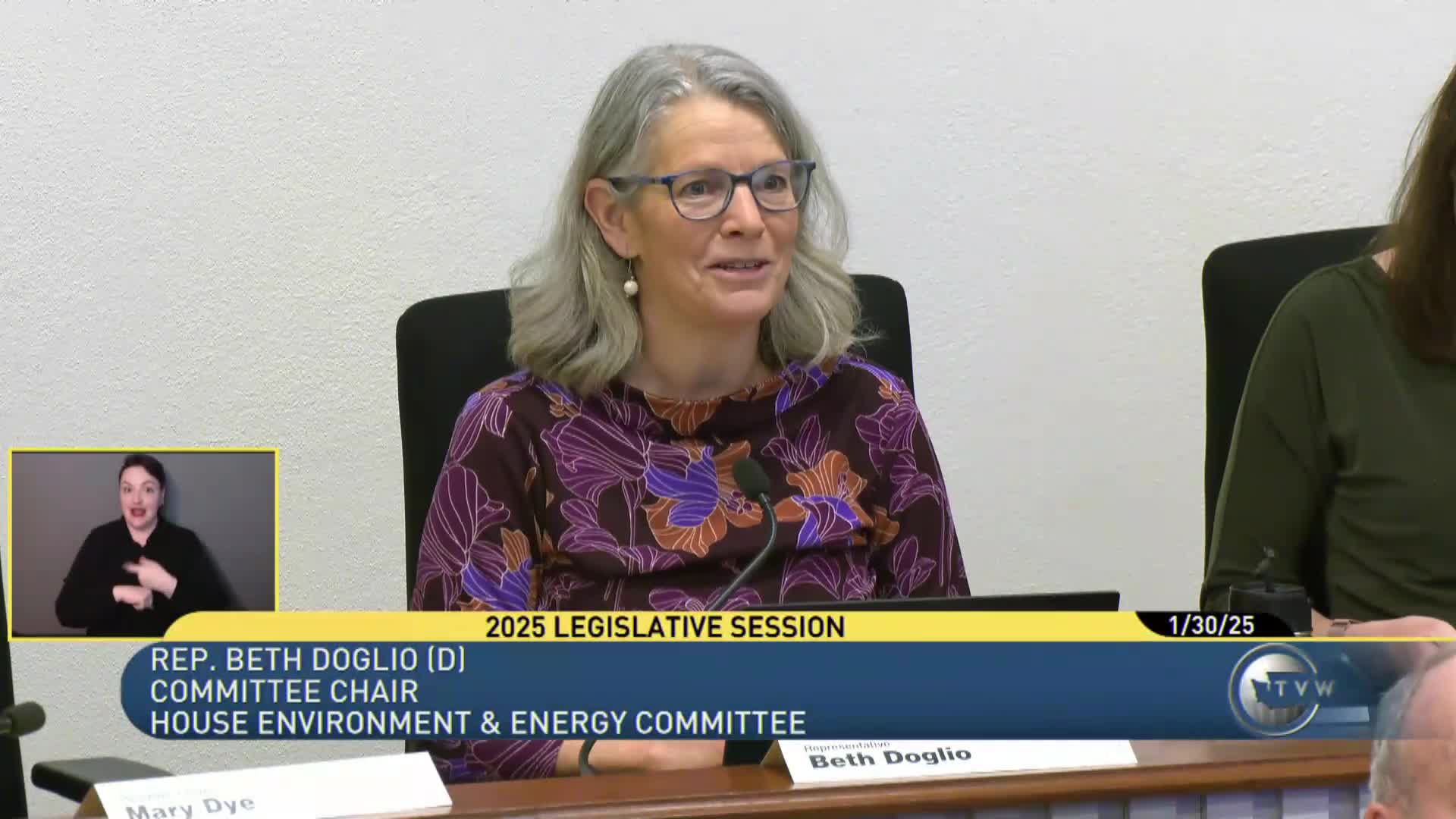
The House Environment & Energy Committee heard testimony on House Bill 1420, a proposal that would require producers of apparel and other covered textile articles to form a producer responsibility organization (PRO) to oversee post-consumer management of those products.
Jacob Lipsen, staff to the committee, told members the bill would require a PRO to register with the Department of Ecology by 2027, pay for needs assessments (the first due in 2028 and updated every five years), submit a post-consumer management plan by Jan. 1, 2029, and be able to implement the plan beginning April 1, 2031 with full implementation by Jan. 1, 2032. The plan would cover collection, transport and processing; annual reporting; independent financial audits; and performance standards that Ecology could adjust. Lipsen also said Ecology would charge a fee to cover its oversight costs and could impose penalties for noncompliance.
Sponsor Rep. Christine Reeves, who framed the bill as a multi-year conversation starter, said the proposal is intended to reduce the amount of textiles going to landfills, encourage repair and reuse, and build a circular approach to textile use. Reeves credited stakeholder work and cited California’s recently enacted textile EPR law as a model the bill builds upon.
Supporters at the hearing included community groups and local governments. Heather Trim of 0 Waste Washington said Ecology’s most recent report shows about 188,000 tons of textiles and apparel enter Washington’s landfills and incinerators, and urged action to reduce that flow. Peter Lyon of the Department of Ecology described textile waste as “a growing problem,” citing a state estimate of over 200,000 tons and saying the bill could create markets for reuse, repair and recycling and support local jobs. Municipal and county solid-waste managers and Seattle Public Utilities testified in favor, saying current local outlets and resale markets cannot keep up with the volume and that producers should share responsibility and costs.
Several retail and business groups registered concerns or opposition. Crystal Leatherman of the Washington Retail Association, Peter Godlowski (Association of Washington Business), Brandon Huskeeper (Northwest Grocery Retail Association) and Andrew Pappas of the American Apparel and Footwear Association all said the bill as drafted would place administrative and financial burdens on retailers and distributors. They asked for further stakeholder work and urged caution about convenience standards that could shift collection responsibilities to retailers.
Testimony also included nonprofit, industry and community stakeholders describing local reuse efforts. Amanda Miller of the South King Tool Library and McKenna Morgan of Seattle Public Utilities described community clothing swaps, repair events and local collection efforts that would benefit from a stronger, coordinated system.
Committee members asked about the bill’s definition of “producer,” whether retailers could be treated as producers when manufacturers operate outside Washington, the expected number of PROs and the Ecology fiscal note. Staff and Ecology said the definition follows prior producer-responsibility laws and can make retailers or importers the obligated party depending on supply-chain facts; Ecology said it will provide additional detail on its fiscal note. Several lawmakers emphasized they viewed the bill as a starting point for stakeholder negotiations.
The hearing closed after panels of supporters and opponents; no committee vote on the bill was recorded in the transcript.
The bill’s timeline for registration, plan submission and implementation, and the topics listed for plans and oversight were presented repeatedly during the hearing; those scheduling and oversight elements remain central points for future negotiation.