Get Full Government Meeting Transcripts, Videos, & Alerts Forever!
Get email alerts on the Transportation Speed Enforcement topic
No spam. Unsubscribe anytime.
House committee hears bill to let courts require in-vehicle speed limiters for serious speeders
Summary
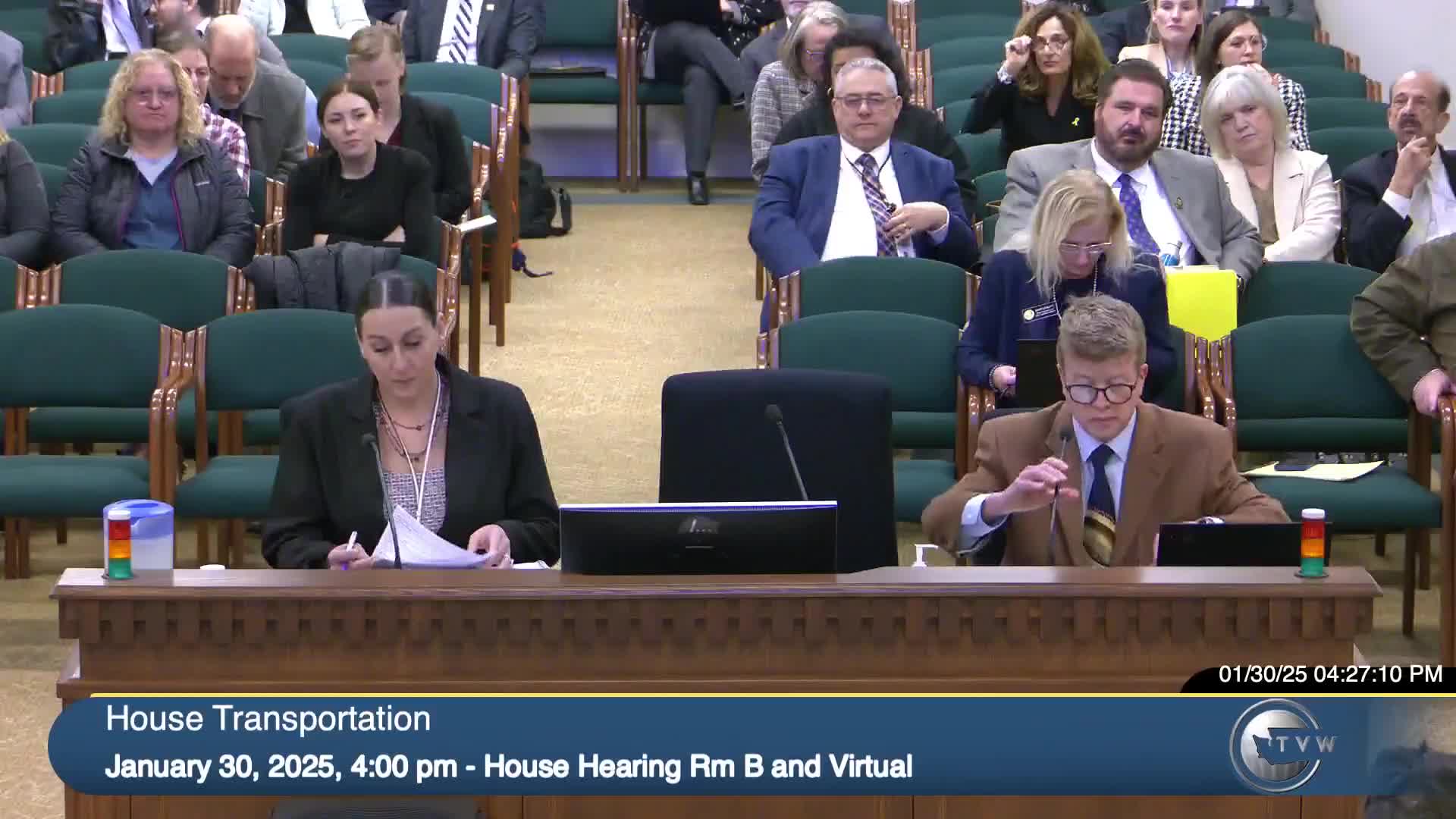
OLYMPIA — The House Transportation Committee heard testimony on House Bill 1596, a proposal to let courts and the Department of Licensing require "intelligent speed assistance" (ISA) devices — GPS-based speed limiters — for people whose licenses were suspended after specified excessive-speeding or racing convictions.
OLYMPIA — The House Transportation Committee heard testimony on House Bill 1596, a proposal to let courts and the Department of Licensing require “intelligent speed assistance” (ISA) devices — GPS-based speed limiters — for people whose licenses were suspended after specified excessive-speeding or racing convictions.
Representative Marie Levitt, prime sponsor, told the committee the measure targets repeat offenders who cause a disproportionate share of speed-related traffic deaths. "Washingtonians are losing their lives or families or losing a loved one from crashes as a result of excessive speeding," Levitt said. The bill would make a new restricted license available to eligible drivers who install an ISA device and pay a fee; courts could also order ISA devices as a condition of pretrial release or post-conviction probation.
Supporters said the devices are proven elsewhere and would reduce repeat excessive-speed driving. "This is a multifaceted crisis that demands a sense of urgency," Levitt said, citing statistics in her remarks that speed-related fatalities have increased and that excessive speeding was a contributing factor in hundreds of Washington deaths in recent years.
Family members of crash victims and safety groups gave emotional testimony urging the committee to advance the bill. Ted Smith, speaking about the death of his daughter Andrea Hudson, described a high-speed crash and said, "We need stiff consequences for these thrill seekers, and we must use any tools available to detect and stop this from happening again." Families for Safe Streets and other victim advocacy groups testified in support, saying speed-limiters would be another enforcement and rehabilitation tool.
Law enforcement and prosecutors generally endorsed the idea but flagged implementation questions. Amy Friedheim, a King County prosecutor who has handled felony traffic crimes, called the ISA device “necessary” but urged the bill not to limit courts to ordering devices only where the recorded excess was 20 mph or more above the limit; she said courts should be able to order devices in other high-risk speed circumstances.
Technical and fiscal concerns were raised by the Department of Licensing and by committee staff. Sandy Myers, committee staff, summarized a multi-agency fiscal note noting indeterminate revenue impacts and implementation workloads for the Department of Licensing and Washington State Patrol. Alejandro Sanchez, Deputy Director at the Department of Licensing, told the panel that the department would work with the sponsor to narrow implementation time frames and address IT and data interconnections.
Witnesses also discussed device details in the bill: the ISA must use GPS to limit operation to posted speeds, allow an override only on limited occasions (the draft allows up to three override events per month for passing or safety), and require users to pay installation, leasing and a $21 monthly monitoring fee (with a new revolving account to offset costs for indigent users). The bill excludes commercial motor vehicle operations from ISA requirements.
Committee members asked questions about the device’s override (“red button”), the fiscal note and parallels to ignition interlock programs for alcohol. Representative Griffey asked whether the system could be run through courts rather than licensing to reduce DOL workload; Levitt said other states’ implementation shows varied approaches and that sponsors will continue to refine the fiscal plan. Levitt defended the limited override function as necessary for occasional safety maneuvers.
No final vote or committee action occurred during the hearing. Committee staff said they would take additional testimony and follow-up information on implementation costs and comparative data from jurisdictions already using ISA technology.
Ending — The committee closed public testimony on HB 1596 after multiple proponents and opponents presented testimony; no amendment or final action was taken at that hearing. The bill as drafted sets an effective date of Jan. 1 of the following year if enacted.