Get Full Government Meeting Transcripts, Videos, & Alerts Forever!
Get email alerts on the Homelessness topic
No spam. Unsubscribe anytime.
Public debate at Alamogordo meeting centers on proposed camping ordinance; advocates urge resources over penalties
Summary
A Jan. 28 work session drew 17 public commenters and dozens of community stakeholders to discuss proposed ordinance 1710, which would restrict camping in public and private spaces. Speakers and service providers urged resource‑based approaches, while some business owners and residents supported stricter enforcement. No vote was taken.
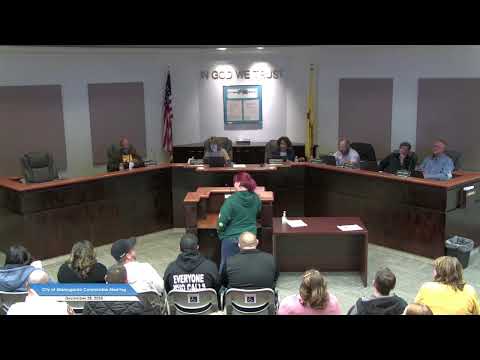
The City Commission hosted a work session on Jan. 28 focused on proposed ordinance 1710, described by staff as a “camping ordinance” that would restrict sleeping and encampments on public and private property without permission. Mayor Susan Payne opened the session and limited commenters to three minutes.
Courtney McCarrie Squires, a local advocate, asked the commission to form a community working group and to review a resident‑drafted ordinance, and she said she had invited the Mesilla Valley Community of Hope to present best practices to the commission on March 11. Squires urged delaying any final action until the commission can consider additional community input.
Clinical and social‑service speakers urged the city to prioritize services. Janette Barunda, clinician with the Police Department’s Mobile Crisis Response Team, said the team is called to assist many people who “fall underneath the camping definition,” and noted the city has no 24‑hour public restroom: “In fact… our public restrooms here are closed at 10 p.m. We do not have a place for them to go.” Barunda recommended a city position and a cross‑sector committee to perform a root‑cause analysis and design local solutions.
Speakers from 100 Percent Otero and health providers described daily outreach and immediate needs. Peg Krim, president of 100 Percent Otero, said enforcement without shelter would punish people with few options: “Please don't punish those who have no options.” Jen Grueger of CHRISTUS Southern New Mexico urged postponing a final decision and creating a housing or neighborhood services position to implement the 2018 comprehensive plan.
Other commenters described public‑safety and quality‑of‑life concerns. Several emailed letters read into the record from Las Cruces residents recounted vandalism and violent incidents connected to large encampments there; business owners at the meeting said encampments had affected customers and employees. Fire and emergency personnel warned of structure and brush‑fire risks connected to unauthorized encampments; Fire Department leadership described multiple recent fires and one pedestrian struck on White Sands Boulevard in the hours before the meeting.
Public‑safety and civil‑liberties questions were raised repeatedly. Commenters and several commissioners discussed the legal and practical limits of penalties, existing municipal code language on obstruction and trespass, assisted‑outpatient treatment and competency diversion programs, and the cost implications of incarceration versus sheltering. Several speakers recommended short‑term options — hotel vouchers, day‑worker programs, and partnerships with neighboring cities and treatment centers — while urging the commission to pursue longer‑term shelter and housing programs through public‑private partnerships.
Why this matters: The proposed ordinance directly affects Albuquerque‑area ordinary public spaces and people experiencing homelessness, and the work session surfaced a broad difference in approaches: immediate enforcement to protect businesses and public spaces versus investment in housing and services to reduce unsheltered homelessness.
Outcome: No vote was taken; commissioners directed staff to continue discussions with county partners, social‑service providers and law enforcement and to schedule follow‑up briefings and possible presentations from neighboring jurisdictions.