Get Full Government Meeting Transcripts, Videos, & Alerts Forever!
Get email alerts on the Capital Projects Financing topic
No spam. Unsubscribe anytime.
Lafayette officials outline $74 million in priority facility needs, ask council to weigh financing options
Summary
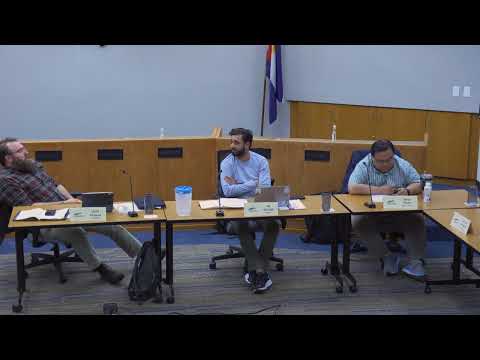
Lafayette city officials on Tuesday presented an initial plan for three priority capital projects — a renovated recreation and aquatic center, a new city hall and a renovated public works service center — and laid out municipal financing options for council consideration.
Lafayette city officials on Tuesday presented an initial plan for three priority capital projects — a renovated recreation and aquatic center, a new city hall and a renovated public works service center — and laid out municipal financing options for council consideration.
City Manager Katie Dolan opened the presentation by saying the meeting would “touch on and elaborate on 3 priority projects that we've identified,” and financial advisers from Hilltop Advisors described tools ranging from certificates of participation to sales‑tax revenue bonds and unlimited‑tax general obligation bonds.
The projects identified as highest priority reflect deferred facility maintenance and aging infrastructure. Deputy City Manager Megan Davis summarized the facility assessments staff commissioned in 2023–24: “The recommendation was for replacement of City Hall. For the recreation center and aquatic center was a renovation and a renovation for the service center,” and she said earlier assessments and preliminary designs produced the cost estimates presented to council.
Staff presented preliminary cost estimates escalated to 2026: roughly $34 million for a substantial recreation and aquatic center project, $34 million for a new city hall and $6 million for the service center — about $74 million in total. Davis described the recreation center problems as primarily aging mechanical systems and inaccessible pipe infrastructure; she said the existing pools are “at their end of life,” with recurring leaks and failing equipment. For the service center, staff showed recent photos of winter water‑pipe failures and said the facility lacks insulation, showers, adequate office separation from heavy equipment storage, and safe materials handling.
Hilltop Advisors (municipal advisor Jason Simmons and Maddie Prodanovic) briefed council on financing choices and legal constraints under Colorado’s TABOR (Taxpayer’s Bill of Rights). They summarized the principal options discussed: pay‑as‑you‑go (annual cash), certificates of participation (COPs, a lease‑type financing that generally does not require voter approval but is subject to annual appropriation), sales‑tax revenue bonds, general‑fund revenue bonds and unlimited‑tax general obligation (GO) bonds backed by a dedicated mill levy. Hilltop said each option brings tradeoffs: COPs can avoid a tax election but typically carry a modest interest premium and constrain operating revenues; GO bonds generally produce lower interest costs but require voter approval and create a dedicated property‑tax levy; sales‑tax bonds can be structured as renewals or extensions of existing rates and have been used frequently on the Front Range.
On timing and next steps, staff and the advisers recommended additional community engagement and optional polling before putting any financing measure before voters. Staff said a February follow‑up workshop would include project prioritization and a financial analysis showing what a sales‑tax or property‑tax question would mean for residents. Polling, if authorized, would need to start in April to return results in time for summer deliberations. Staff estimated additional council briefings over the spring and summer and noted the practical timeline for an election in November 2025 or deferring to 2026 (the city has one general obligation bond maturing in 2026, which would affect capacity).
Council members expressed general support for further analysis and public outreach. Several members said the recreation and service‑center projects felt more urgent than city hall: “Having been to the service center, it's bad,” one councilor said, summarizing council sentiment. Council directed staff to return in February with the financial impacts of possible packages (individual projects or combinations), polling scope and a recommended public‑engagement plan; staff also noted legal and administrative steps (bond counsel, disclosure training and potential ballot language) that would follow if council decides to seek voter approval.
No formal votes were taken at the workshop; council provided direction to staff to continue analysis and engagement.
Why this matters: Lafayette’s three priority projects would be long‑term, high‑cost investments that affect municipal operations, public amenities and the fiscal profile of the city. Choosing a financing path would determine whether residents see a property‑tax mill levy, a sales‑tax question or a lease/appropriation approach, and each path brings legal, political and budgetary tradeoffs.
Staff noted the projects will require additional design, public input and refined cost estimates. If council wishes to pursue a ballot measure, staff and advisors said they would return with ballot language options, financial sizing and polling results before placing a question on the ballot.
Ending: Council did not commit to a financing method at the workshop. Instead members asked staff to return with prioritized project scenarios, clearer cost and timing estimates and a public‑engagement plan so council can decide whether to pursue a ballot measure in late 2025 or to move the work into 2026.