Get Full Government Meeting Transcripts, Videos, & Alerts Forever!
Get email alerts on the Legislative Procedure topic
No spam. Unsubscribe anytime.
Minn. House Republicans ask state Supreme Court to curb Secretary of State, seek pay penalties for absent lawmakers
Summary
House Republican leader Representative Nyska said his caucus filed a petition with the Minnesota Supreme Court on the 17th day of the legislative session, asking the court to rule that Secretary of State Steve Simon exceeded his authority by refusing to recognize motions from a group smaller than a quorum.
House Republican leader Representative Nyska said his caucus filed a petition with the Minnesota Supreme Court on the 17th day of the legislative session, asking the court to rule that Secretary of State Steve Simon exceeded his authority by refusing to recognize motions from a group smaller than a quorum.
“Today was the 4th day in a row in which Secretary of State Simon, as presiding officer here in the House, has not recognized me to make a motion,” Nyska said. “He has overstepped his authority as the presiding officer.”
The petition, Nyska said, asks the court to affirm that those legislators who are present — 67 members, a number the Republicans describe as a “lesser number than a quorum” — have the constitutional power to adjourn from day to day and to impose penalties on absent members. Nyska said the penalties the caucus is seeking would include withholding salary for the days lawmakers are absent and making them ineligible for per diem for the session.
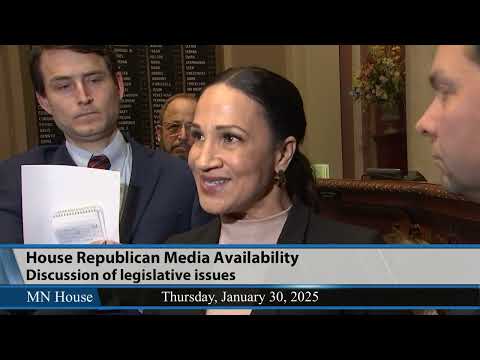
Nyska told reporters the caucus has attempted to make that motion at the desk four days in a row but that Simon would not recognize it, leaving them “no option other than to ask the Minnesota Supreme Court to again intervene in his interference in our legislative branch activities.” Representative Scott handed Secretary Simon courtesy copies of the court papers when he left the roster, Nyska said.
Nyska cited out‑of‑state precedent, saying Indiana and Texas appellate decisions have upheld penalties or other enforcement measures when smaller groups of lawmakers have acted to compel absent members. “The Indiana Supreme Court dealt with exactly this question,” he said. “...A penalty means you’re taking away something someone is entitled to.” He also referenced similar enforcement in Congress and other states.
When asked whether Simon had explained his reasoning, Nyska said Simon had described his choice as “the safest decision to make,” and that he had not pointed to constitutional language supporting his interpretation.
Nyska said the caucus had initiated the court filing “right now,” and that its lawyers come from his law firm; he said the firm would be paid privately and that it is “likely campaign funds” will be used to cover costs. He said he is open to talks with House Speaker Melissa Hortman if she brings a “serious offer,” but said there were no scheduled meetings.
The Minnesota Supreme Court will set the litigation schedule, Nyska said. “They will likely issue a scheduling order. I would hope that would be tomorrow,” he told reporters, adding that timing is ultimately up to the court.
The disputes come amid a multi‑day absence by a number of House members; Nyska described the tactic as a protest and said it was “a disservice to the taxpayers.” The clerk or presiding officer’s unilateral adjournment from the rostrum — rather than through a motion by members present, he said — is the central constitutional complaint.
No legislative vote on the proposed penalties occurred during the exchange; Nyska said the members present would need to have a discussion and vote on any internal motion to impose penalties. The court petition is the immediate step the Republican caucus announced.
Court officials and Secretary of State Steve Simon did not provide comment during the exchange recorded in the transcript. The Minnesota Supreme Court will determine whether to expedite the matter and set further deadlines.