Get Full Government Meeting Transcripts, Videos, & Alerts Forever!
Get email alerts on the Racial Covenants Recording Fee Waiver topic
No spam. Unsubscribe anytime.
Committee advances bill to waive county recording fees for removing racial/restrictive covenants
Summary
Senate File 559 would prohibit counties from charging a recording fee for documents that remove racial or other restrictive covenants from property titles. The committee adopted an author's amendment and voted to send the bill to the Judiciary Committee with recommendation for passage.
Senate File 559, a proposal to prohibit county recording fees for documents that remove racially restrictive or other unlawful restrictive covenants from property titles, was advanced by the Senate Committee on Housing and Homelessness Prevention and recommended for referral to the Judiciary Committee.
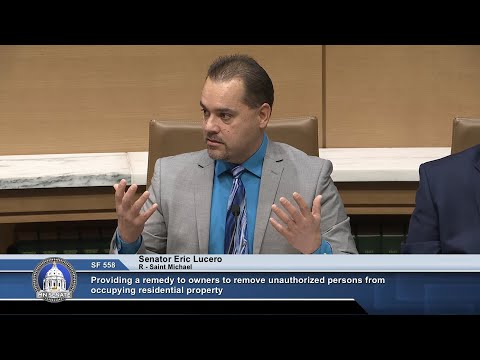
Sponsor Senator Lucero said the bill grew from work by groups identifying restrictive covenants recorded on titles decades ago. Although such covenants were declared illegal years ago, the language often remains on recorded deeds and titles; groups are working to identify and remove them. "When an effort is performed to remove those [covenants], it's still a document that has to be recorded on title," Lucero said. Recording fees vary by county and can be roughly $40 to $60; the bill would bar counties from charging a recording fee for filings that remove racial or restrictive covenants.
Senators from both parties signed on as co‑authors and expressed support. Senator Port and Senator Housley both identified themselves as co‑authors and urged the committee to move the measure forward. Committee staff cited Mapping Prejudice at the University of Minnesota, which has identified about 33,000 racial covenants in Twin Cities area records, as background information in the packet.
No opponents signed up to testify; the committee record includes a letter of support from Legal Aid Minnesota. The committee adopted the author's A2 amendment and voted to recommend the bill for passage and referral to the Judiciary Committee; the motion carried by voice vote.
If enacted, the bill would reduce the transactional cost of removing discriminatory language from property records and assist community groups and property owners seeking to clear titles. The committee did not provide a fiscal note in the hearing; members asked staff follow‑up questions about the geographic distribution of covenants and the administrative impact on county recorders' offices.