Get Full Government Meeting Transcripts, Videos, & Alerts Forever!
Get email alerts on the Immigration Enforcement topic
No spam. Unsubscribe anytime.
House committee advances bill to create state immigration enforcement division, bans sanctuary policies
Summary
The Tennessee House Immigration Committee voted 15-6 to approve House Bill 6001, a measure to create a Centralized Immigration Enforcement Division in the Department of Safety, fund local 287(g)-style enforcement grants, add a distinct marker to lawful noncitizen driver’s licenses and criminalize certain sanctuary policies.
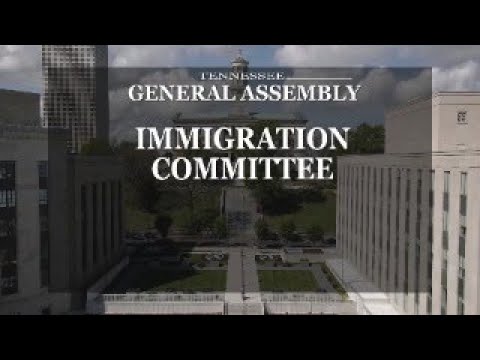
NASHVILLE — The Tennessee House Immigration Committee voted 15-6 to approve House Bill 6001 on the final roll call, sending the measure to the Finance Committee after an extraordinary-session hearing that included public testimony and multi-hour debate.
The bill, introduced by Representative Lambert, would create a Centralized Immigration Enforcement Division (CIED) within the Department of Safety, establish grants to support local participation in the federal 287(g) immigration-enforcement program, add a distinctive marker for lawful noncitizen driver’s licenses, and make adoption of a “sanctuary policy” by certain local officials a criminal offense under state law.
Why it matters: supporters said the changes will improve coordination with federal immigration authorities and reduce costs borne by local jails and governments; opponents warned the measure could separate families, chill access to schools and health care, prompt litigation and raise substantial fiscal and constitutional questions.
Representative Lambert, the bill sponsor, described the measure as creating "the CIED division, the Centralized Immigration Enforcement Division" to serve as a liaison with federal authorities and to support local agencies that cooperate with 287(g) agreements. He told the committee the bill would provide funding and clarify procedures so local law enforcement can hold detained noncitizens until federal immigration officials take custody when appropriate.
Two people who identified themselves as members of immigrant households testified in opposition. Ashley Warrington, who said she is a native Nashvillian married to a Mexican small-business owner, told the committee that mixed‑status families would be harmed if the bill becomes law. "Immigrants like Alejandro are vital to Tennessee's success," Warrington said, and she cited an estimate she attributed to testimony that the bill's creation of a state enforcement division and grant program would cost more than $5,500,000. She also told the committee her husband is pursuing legal residency and said the federal immigration process has been long and costly in her case.
Aidan Pratt, who described himself as a former colleague of undocumented workers, said the bill would "do more harm than good" and called it "nothing more than fascism in disguise." Pratt warned the legislation could reduce immigrant cooperation with law enforcement and discourage people from seeking medical attention or reporting crimes.
Department of Safety representatives answered operational questions but declined on some policy items. Elizabeth Stroker, legislative director and assistant general counsel for the Department of Safety, said the fiscal note anticipates a staffing level of four for the new division and that the division would report to the commissioner of safety. "I believe the fiscal note calls for staffing of 4 individuals," Stroker said. She also said the department previously had a 287(g) program about 15 years ago and that the bill would create a state avenue for counties that enter 287(g) agreements with the federal government to seek grant funding and department assistance.
Committee members pressed for details on constitutional exposure and enforcement. Matt Mundy, a legal adviser to the committee, warned that applying a criminal penalty to elected officials who, in their capacity as members of governing bodies, vote to adopt a sanctuary policy could be "problematic, constitutionally." Mundy cited legislative-immunity doctrines that protect deliberative legislative acts and said the criminal provision could raise immunity concerns for certain local elected bodies.
Other lawmakers raised implementation questions: where detainees would be housed, whether local jails have capacity, how grants would be funded, how a "sanctuary policy" is defined and who would determine or prosecute alleged violations. Representative Lambert referred the committee to a statutory definition cited in committee discussion (recorded in the hearing as TCA 768102) and said enforcement discretion would rest with local district attorneys and ultimately a judge or jury in individual cases.
Amendments and procedure: the committee considered and adopted several amendments on technical language, grant confidentiality and fiscal timing. One amendment establishes that certain sections would take effect immediately while others would take effect July 1, 2025, and that some provisions would expire January 20 at 11:59 a.m. unless reauthorized by the General Assembly. The committee tabled a number of member amendments seeking additional protections (including buffer protections around schools, hospitals and places of worship, and protections for local elected officials' votes).
Vote: after a roll-call vote the committee recorded 15 ayes and 6 nos. Members recorded as voting aye were Representatives Barrett, Carringer, Darby, Doggett, Eldridge, Fritz, Hurt, Lynn, Reedy, Renault, Stevens, Warner, Zachary, Vice Chair Bolsow and Chairman Todd. Members recorded as voting no were Representatives Brooks, Dixie, Hakeem, Johnson, Jones (Davidson) and Mackenzie. The clerk announced, "Motion carries. Bill moves on to Finance."
What's next: the bill moves to the Finance Committee. Supporters said they expect the department to administer the new division and grants; opponents signaled likely legal challenges and expressed concern about family separation and community impacts.
Votes at a glance: House Bill 6001 — Passed in committee 15–6; moves to Finance.