Get Full Government Meeting Transcripts, Videos, & Alerts Forever!
Get email alerts on the Local Government Budget topic
No spam. Unsubscribe anytime.
King George superintendent unveils FY26 needs‑based budget, asks county for $4.1 million more
Summary
Superintendent Jesse Boyd presented a needs‑based FY26 budget request that would increase the local funding request by about $410,000 over FY25 and includes a 3% staff pay proposal, compression relief, and nearly $1 million in new positions.
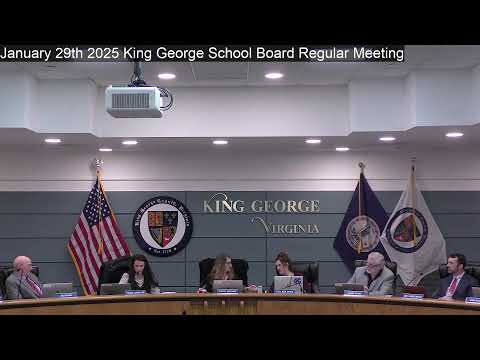
Superintendent Jesse Boyd presented King George County Schools’ FY26 needs‑based budget to the school board on Jan. 29 and said the division will ask the Board of Supervisors for an increase in local funding to cover salary steps, health care, and additional staff.
Why it matters: the requested increases feed directly into the county budget process. Boyd said the division’s role is to present a needs‑based proposal and then work with supervisors through public hearings and work sessions.
Budget highlights: Boyd proposed a 3% salary increase for staff (the governor also recommended 3%), pay‑scale “compression” relief targeted at mid‑career teachers, and a package of new positions (elementary reading teachers, paraprofessionals, ESOL support, three high‑school teaching equivalents, a Virtual Virginia coordinator and an attendance intervention specialist). The superintendent estimated the new positions cost about $982,000; compression adjustments about $436,000; and the 3% across‑the‑board increase about $180,000. The district is also budgeting for a projected 20% increase in health insurance premiums in planning estimates.
Boyd said the division projects average daily membership of approximately 4,475 students for FY26 and described how state tools (the CALC formula) and the local composite index affect what the state and locality each contribute. “My responsibility … is to construct a needs‑based budget,” Boyd said, describing outreach the division used to build the request (staff surveys, principal input, community forums and a budget builder tool for departments).
Process and timing: the superintendent said the next board meeting will include the public hearing on the budget and a work session; the board plans to forward a request to the Board of Supervisors after those steps. Boyd said several slides in the budget book show revenue scenarios; final state funds will depend on General Assembly action this winter.
What officials asked for: board members pressed for clarity on which items were one‑time startup costs (for example Virtual Virginia tuition and program startup) and which are recurring personnel commitments. Boyd said Virtual Virginia tuition and a proposed coordinator position are a combination of startup and recurring costs and that the division will refine estimates once enrollment interest is known.
Ending: the superintendent provided a 70‑page budget book to board members and the public and invited follow‑up questions ahead of a Feb. 10 public hearing and work session.