Lifetime Citizen Portal Access — AI Briefings, Alerts & Unlimited Follows
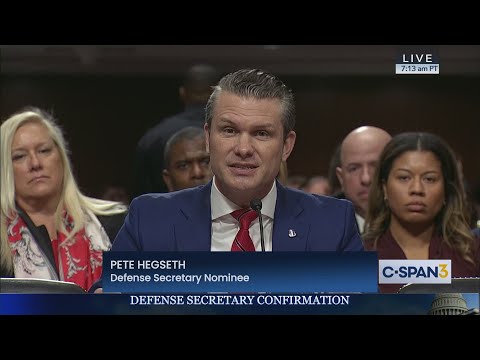
Senate Armed Services hears sharp debate over Pete Hegseth's fitness, priorities for Pentagon
Loading...
Summary
During a Senate Armed Services Committee confirmation hearing, nominee Pete Hegseth pledged to restore a “warrior ethos,” prioritize readiness and procurement reform, and eliminate diversity initiatives; Democrats pressed him on allegations about his past conduct, management experience and statements on women in combat and the laws of war.
WASHINGTON — The Senate Armed Services Committee spent a contentious hearing probing the nomination of Pete Hegseth to be secretary of defense, with supporters emphasizing his combat service and critics pressing him on management experience, written statements about women in combat, and allegations of misconduct.
Chairman Roger Wicker opened the hearing by calling the moment “one of consequence,” saying, “If confirmed, mister Pete Hegseth would assume the role in a moment of consequence.” Ranking Member Jack Reed challenged that premise, saying bluntly, “I do not believe that you are qualified to meet the overwhelming demands of this job” and citing numerous public allegations he said the nominee should address.
The nut graf: Senators across the aisle framed the hearing as a test of whether Hegseth could lead a department of roughly 3,000,000 uniformed, civilian and contract personnel with an annual budget approaching $900 billion while safeguarding civil‑military norms. Republicans generally praised Hegseth’s combat record and promises to reorient the Pentagon toward “lethality and readiness.” Democrats and some Republicans focused questioning on his public writings about diversity and women in combat, advocacy for pardons in war‑crimes cases, comments about the law of armed conflict, and reported past personal and nonprofit financial problems.
Hegseth outlined priorities if confirmed: “To bring back war fighting, if confirmed, I’m going to work with president Trump and this committee to, 1, restore the warrior ethos to the Pentagon,” he said, listing acquisition reform, accelerating transition of new technologies out of the so‑called “valley of death,” passing an audit, and modernizing nuclear forces. He repeatedly pledged to support programs that “advance American interests” and said he would work with this committee on procurement and industrial base issues.
On nuclear deterrence, Hegseth told Senator Joni Ernst he would support modernizing all three legs of the triad and use tools such as the Defense Production Act when necessary. On shipbuilding and Indo‑Pacific deterrence he told senators he would prioritize range and survivability and push to rebuild the defense industrial base.
A major focus of questioning was Hegseth’s public statements and writings on women in the military. Senators asked why his views appeared to shift after his nomination; Hegseth answered that he supported access to combat roles so long as gender‑neutral standards remained “high,” but he and several senators differed sharply over whether his past language had denigrated women serving in uniform. Senator Jeanne Shaheen pressed him through multiple examples from broadcasts and his book; Senator Kirsten Gillibrand said his past comments were “hurtful to the men and women who are currently serving.” Hegseth reiterated: “I would be honored to have the opportunity to serve alongside you, shoulder to shoulder, men and women…you will be treated fairly and with dignity, honor, and respect.”
Democrats probed Hegseth’s statements about the law of armed conflict and interrogation techniques. Ranking Member Reed quoted Hegseth’s book and asked whether he rejects the Geneva Conventions; Hegseth said the United States must abide by law but also avoid “burdensome rules of engagement” that impede battlefield effectiveness. When pressed about waterboarding and torture, he said, “the law of the land is that waterboarding is not legal.”
Several senators raised Hegseth’s role in seeking pardons for service members convicted of war crimes and asked how he would balance support for warfighters with enforcement of discipline. Hegseth said he looks “case by case” and that he defers to the “warfighter” when assessing disputed prosecutions.
A prolonged line of questioning from Democrats focused on allegations of past misconduct and organizational financial shortfalls at two veteran nonprofits Hegseth led. Senators cited news reporting, tax filings and a referenced forensic review; Hegseth called much of the press reporting a “coordinated smear campaign,” said he had been “completely cleared” of specific allegations he described as false, and pointed to letters of support from veterans and former colleagues submitted to the record. He told senators he had not been fired from the nonprofits and that the organizations’ work led to policy changes on veterans benefits.
Management experience and scale drew repeated scrutiny. Several senators noted Hegseth’s largest civilian leadership roles had hundreds rather than thousands or millions of employees and asked how he would oversee acquisition, audits and complex international agreements. Hegseth said he would hire experienced deputies and subject matter experts and cast a clear vision, but he acknowledged he had not led an organization the size of the Department of Defense.
On accountability and audits, Hegseth endorsed making a Pentagon audit a priority and said he would work to “find those dollars” for higher‑priority needs. On recruiting and retention, he and senators agreed the department was in a crisis; Hegseth said he expected renewed interest in service under a Trump administration and pledged efforts to remove policies he called distractions from readiness.
The hearing included many submitted letters and statements for the record from veterans, retired flag officers, colleagues and critics. No committee vote occurred during the session; senators reserved final judgment and asked for additional briefings and documents, including the FBI background investigation and financial records referenced by members. The committee agreed to a schedule for closing the record and follow‑up questioning.
Ending: The hearing underscored a partisan divide over basic assumptions — whether Hegseth’s private sector and nonprofit leadership and public pronouncements disqualify him from managing the Pentagon’s scale and legal complexity, or whether his combat experience and promises to prioritize readiness are the reforms the department needs. The committee left open further review of classified briefings, financial documents and background checks that senators said they would need before deciding whether to confirm the nominee.