Get Full Government Meeting Transcripts, Videos, & Alerts Forever!
Get email alerts on the Latin America topic
No spam. Unsubscribe anytime.
Senators press nominee on China’s footprint in the Americas, Panama Canal and transnational crime
Summary
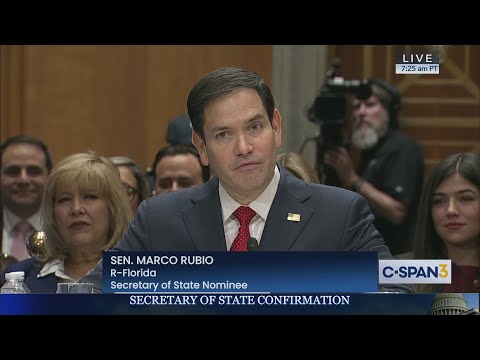
Lawmakers questioned Marco Rubio on China’s commercial and strategic investments in the Western Hemisphere, security implications including the Panama Canal, and U.S. policy toward Cuba, Venezuela, Haiti and Mexican cartels.
Senators used the hearing to press Senator Marco Rubio on China’s growing footprint across the Western Hemisphere, including concerns that Chinese‑run port facilities on both ends of the Panama Canal could be used as choke points in a crisis.
Rubio called the Panama Canal issue a “legitimate” concern and said decades‑old treaty arrangements and the presence of Chinese state‑backed companies in port infrastructure raise security questions that merit study. He told the committee that he had visited Panama and that senior military officials had similarly warned that port facilities could have “dual use” application in conflict.
Lawmakers pressed Rubio on Cuba and Venezuela. He described Cuba’s governing apparatus, including the military‑owned holding company Gaesa, as a source of revenue for the regime and said he saw Cuba as engaging with groups the U.S. regards as malign. Rubio also criticized recent policy changes that eased sanctions on Cuban entities, calling the island’s ruling structures “corrupt and inept.”
On Venezuela, Rubio told senators the government is a “narco‑trafficking organisation” that has fostered migration and enabled Iranian and Russian strategic ties in the region. On Haiti he said the country’s lack of legitimate authority was creating a regional crisis and praised international efforts, including Kenyan contributions, to restore order.
Senators also asked about designating Mexican cartels as foreign terrorist organisations. Rubio said cartels are “terroristic in their nature” and that U.S. policy should identify them as such or otherwise apply tools that make clear they are transnational terroristic organisations; he advocated deep collaboration with Mexico rather than unilateral action.
Why it matters: The committee highlighted the intersection of foreign investment, security and migration in the Americas. Senators warned that commercial investments tied to foreign governments can have strategic consequences and asked the nominee how the State Department would address them if confirmed.