Get Full Government Meeting Transcripts, Videos, & Alerts Forever!
Get email alerts on the Middle East topic
No spam. Unsubscribe anytime.
Rubio backs robust support for Israel, criticises ICC action; senators press on hostages and humanitarian aid
Summary
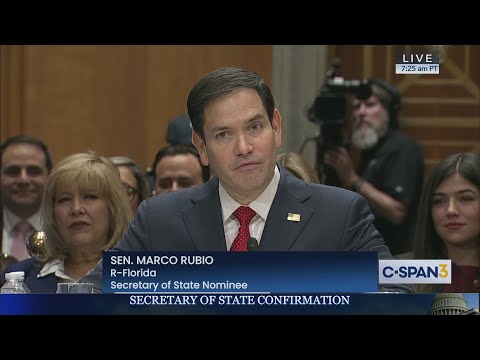
Senators questioned Marco Rubio about U.S. policy toward Israel, the international criminal court’s recent steps, and plans for humanitarian support and hostage diplomacy. Rubio called the ICC’s prosecution “a dangerous precedent” and urged strong measures against Hamas while acknowledging civilian suffering in Gaza.
Senator Marco Rubio told the Foreign Relations Committee he supports “strong” U.S. backing for Israel after the October 7 Hamas attacks and criticized the International Criminal Court’s decision to pursue cases that Rubio called morally equivalent in error.
During questioning, Rubio described Hamas’s October 7 operation in blunt terms, saying the militant group “sent a bunch of savages into Israel with the express and explicit purpose of targeting civilians” and argued that Israel has a right to defend itself. He also acknowledged civilian suffering and said humanitarian relief should be a U.S. priority.
Rubio and several senators pressed for an immediate effort to secure the release of hostages held in Gaza. Rubio said the upcoming reported exchange phases — starting with women, children and older hostages — were a positive step but not a resolution to the broader conflict. He called for international coordination to secure hostages’ release and to organise post‑conflict stabilization.
On the International Criminal Court, Rubio told senators the court had damaged its credibility by pursuing an action against Israel and likened the dual indictments to a false moral equivalency. He warned that the ICC’s actions might set a precedent that could later be applied to U.S. service members or leaders.
Several senators discussed long‑term regional diplomacy, including the Abraham Accords and reported progress toward broader Arab‑Israel normalization. Rubio said a Saudi‑Israel normalization would be “historic” and could leverage enormous economic and security benefits — if it could be achieved alongside steps that address Palestinian governance and humanitarian needs.
Why it matters: The hearing addressed immediate humanitarian and diplomatic priorities — hostage returns, ceasefire mechanics and humanitarian corridors — alongside institutional debates about international justice that could affect U.S. support in multilateral forums.