Get Full Government Meeting Transcripts, Videos, & Alerts Forever!
Get email alerts on the Russia Ukraine topic
No spam. Unsubscribe anytime.
Rubio says Ukraine war must end; senators press for leverage and clarifications on U.S. support
Summary
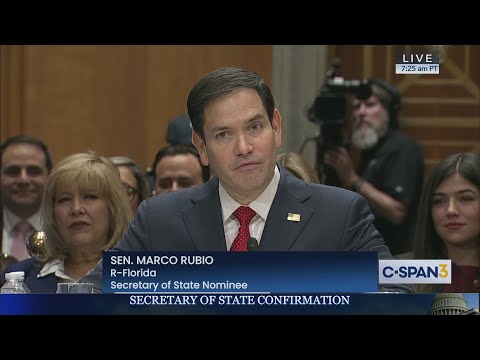
Marco Rubio told the committee the United States should make ending the war in Ukraine a clear objective and use leverage in negotiations, while senators pressed him on past votes and how he would support Ukraine’s negotiating position.
Senator Marco Rubio said the United States should make ending the war in Ukraine an explicit goal and should use leverage in any negotiation to secure a durable peace. In exchanges with committee members he described the conflict as a “war of attrition” and said both sides would need leverage at the negotiating table.
Rubio said, referencing public comments, “I want the dying to stop,” and urged that a ceasefire followed by durable diplomacy would likely require concessions from both Russia and Ukraine. He warned that an outcome that left Russia with unchecked leverage could encourage later aggression.
Senators across the aisle pressed Rubio on his prior votes: he explained he voted against a supplemental package when it did not address migration at the U.S. southern border, which he said was a condition he raised in November. He also told senators he was confident that the U.S. must help Ukraine have sufficient leverage at any diplomatic table and that Washington should be explicit about end goals when funding and arming Kyiv.
On NATO, Rubio defended the alliance but said U.S. partners must be capable contributors and that allies should shoulder more of their defense burden. He described the recent increases in European defense spending as proof that strengthening partners is possible and necessary.
Why it matters: Senators sought specific answers about the new administration’s likely posture toward Ukraine, how sanctions and aid would be used as leverage, and whether the U.S. would make guarantees that might constrain future flexibility. Rubio’s answers balanced support for a strong negotiating position with the view that diplomacy will require trade‑offs.