Get Full Government Meeting Transcripts, Videos, & Alerts Forever!
Get email alerts on the Hhs Nomination topic
No spam. Unsubscribe anytime.
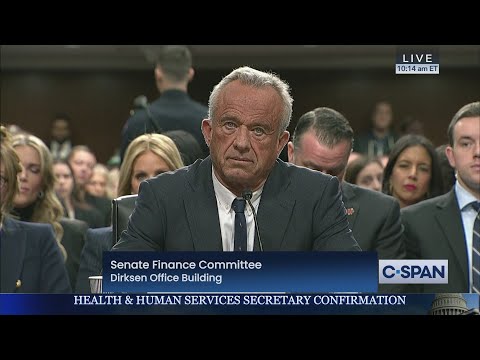
Kennedy confirmation hearing spotlights vaccine record, abortion drug and Medicaid plans
Summary
Robert F. Kennedy Jr.’s Senate Finance Committee confirmation hearing centered on his record on vaccines, his stance on the abortion medication mifepristone, and broad proposals to reshape Medicaid and public health agencies, with senators pressing him on past statements, litigation income and plans for the Centers for Disease Control and NIH.
President Trump’s nominee to lead the Department of Health and Human Services, Robert F. Kennedy Jr., faced sustained questioning at a Senate Finance Committee hearing about his past statements on vaccines, his role in the 2019 measles outbreak in Samoa, his posture on the abortion drug mifepristone and his proposals for Medicaid and agency staffing.
The hearing opened as Chairman Mike Crapo welcomed the nominee and later turned time over to Ranking Member Ron Wyden, who bluntly framed the question before the committee: “The question before the finance committee this morning is whether Robert f Kennedy should be trusted with the health and well-being of the American people,” and accused Kennedy of promoting “conspiracy theories, quacks, charlatans, especially when it comes to the safety and efficacy of vaccines.”
Why it matters: The HHS secretary oversees federal public health programs that affect tens of millions of Americans, including Medicare and Medicaid, and directs agencies such as the CDC, FDA and NIH. Senators emphasized that the office requires both judgment on emergent public-health crises and stewardship of scientific agencies.
Most of the committee’s questioning fell into several clusters: past vaccine-related statements and actions; Kennedy’s views and potential policies regarding mifepristone and Title X; proposals to change Medicaid/Medicare administration, rural health and drug pricing; and questions about his outside income and litigation that critics say present conflicts of interest.
On vaccines and Samoa, Senator Wyden pointed to Kennedy’s record and to an account of the Samoan measles outbreak: “He traveled there himself to push his views and pour fuel on the fire of a measles outbreak … In the end 83 Samoans died, mostly kids, from a disease that is easily preventable,” Wyden said. Kennedy denied responsibility for the outbreak and said he went to Samoa to implement a medical records system, adding that he is “pro safety” and “I am not anti vaccine.” He told the committee, “All of my kids are vaccinated.”
On abortion and mifepristone, senators repeatedly pressed whether Kennedy would follow any direction from the White House to limit access. Kennedy said President Trump asked him to “study the safety of mifepristone” and that he would “ask NIH and FDA to do that,” while also saying he agreed with President Trump that “every abortion is a tragedy.” Several senators pushed for yes/no commitments about preserving access to the medication; Kennedy declined to pledge a specific regulatory outcome, saying he would implement the president’s policies.
On Medicaid, Medicare and rural health, Kennedy told senators he sees chronic disease as the principal driver of U.S. health spending and said his priorities include greater transparency, value-based care and pilot programs in states. He said he would prioritize rural hospitals and workforce issues and touted possibilities such as telehealth and AI-supported care. When pressed for specific proposals about integrating Medicare and Medicaid for dually eligible beneficiaries, he said he did not have a concrete plan yet and favored state pilot programs to test approaches.
On agency staffing and research priorities, Kennedy said he favors “radical transparency” for HHS and pledged to prioritize chronic-disease research and long COVID trials. He told senators he would protect stem-cell research and would ask agencies to publish more raw data and replication studies to restore public trust.
On conflicts and outside income, senators highlighted Kennedy’s history of promoting and financially benefitting from litigation and book sales. Senator Elizabeth Warren asked him to commit not to take compensation from drugmakers, device makers, insurers or from lawsuits against drug companies while in office and for four years afterward; Kennedy agreed he would not accept industry compensation after leaving HHS but declined to promise never to engage in litigation against drugmakers. He said he would comply with ethics rules and noted he has filed financial disclosures and worked with the Office of Government Ethics.
Committee dynamics and next steps: The hearing ran several hours and featured lengthy questioning from members from both parties. Multiple senators said they would follow up with written questions; the chairman set a 5 p.m. deadline for questions for the record. Kennedy will appear before the Senate Health, Education, Labor and Pensions Committee in a separate confirmation session the following day.
Kennedy’s closing pitch was a return to his campaign theme: “Make America Healthy Again.” He said, if confirmed, he would “make sure our tax dollars support healthy foods,” scrutinize chemical additives and “create an honest, unbiased, gold standard science at HHS, accountable to the president, to congress, and to the American people.”
The committee did not take a vote at the hearing; senators will continue to review written materials and submit follow-up questions.