Get Full Government Meeting Transcripts, Videos, & Alerts Forever!
Get email alerts on the Confirmation Hearing topic
No spam. Unsubscribe anytime.
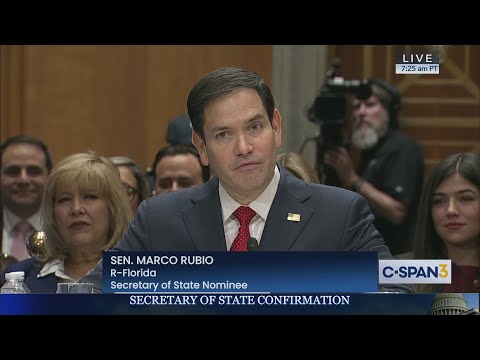
Rubio frames ‘America first’ foreign‑policy test in Senate confirmation hearing
Summary
Senator Marco Rubio told the Senate Foreign Relations Committee that a second Trump administration would run the State Department to prioritize American security, strength and prosperity. Senators pressed Rubio on China, Ukraine, the Middle East, Latin America and department staffing during a wide‑ranging confirmation hearing.
Marco Rubio told the Senate Foreign Relations Committee on Thursday that the mission of the U.S. State Department under a second Trump administration would be judged on one simple test: whether policy “makes America safer, makes America stronger, or makes America more prosperous.”
The Florida senator, President Trump’s nominee for secretary of state, outlined a broad foreign‑policy platform in his opening statement and during more than four hours of questioning. Rubio framed his priorities around countering the People’s Republic of China, supporting allies such as Israel and NATO, ending the war in Ukraine, confronting Iranian influence, and restoring what he called a “sense of deterrence” in American diplomacy and defense.
Why it matters: The hearing showcased the choices the next administration would face across multiple theaters. Senators from both parties pressed Rubio on tactical decisions — from Taiwan defense and Chinese economic entanglement to humanitarian relief in Gaza and staffing career embassies — while seeking commitments he could deliver if confirmed.
Rubio told senators the department should align every program and dollar to concrete U.S. national‑interest tests. “Every dollar we spend, every program we fund, every policy we pursue must be justified by the answer to one of three questions,” he said. He added: “Does it make America safer? Does it make America stronger? Or does it make America more prosperous?”
Committee chairman James Risch (R‑Idaho) opened the hearing by warning against disruptions in the committee room, then introduced Rubio and described the broad agenda senators raised during questioning. Ranking member Sen. Jeanne Shaheen (D‑N.H.) said the committee should work to speed confirmations for career foreign‑service officers and pressed Rubio on Ukraine and Syria. Multiple senators from both parties pushed Rubio to commit to rapid staffing of deputy and undersecretary posts.
Rubio said he has interviewed many candidates for top posts and would prioritise nominees who are mission aligned, capable and confirmable. He also told senators he expected to use a “whole of government” approach with the Department of Defense, Commerce and Energy on issues such as sensitive technologies and critical‑minerals supply chains.
The hearing included extended questioning on China’s capabilities and influence, Russia’s war in Ukraine, Israel and Gaza (including the International Criminal Court), North Korea’s weapons programs, U.S. policy toward Cuba, Venezuela and Haiti, and China’s commercial and strategic investments in the Western Hemisphere.
Looking ahead: Rubio said he would emphasize rebuilding American industrial capacity and alliances at home and abroad to reduce strategic reliance on rivals. The full committee left the record open for written questions; the hearing transcript and members’ questions will form part of the confirmation record.