Get Full Government Meeting Transcripts, Videos, & Alerts Forever!
Get email alerts on the School Safety topic
No spam. Unsubscribe anytime.
Revere officials say exclusionary discipline has fallen; district hires Guidepost for security audit
Summary
Revere Public Schools officials reported lower exclusionary-discipline counts so far this school year, credited a combination of disciplinary actions, restorative practices and added school resource officers, and said the district has hired Guidepost to audit safety across physical, operational and technology areas.
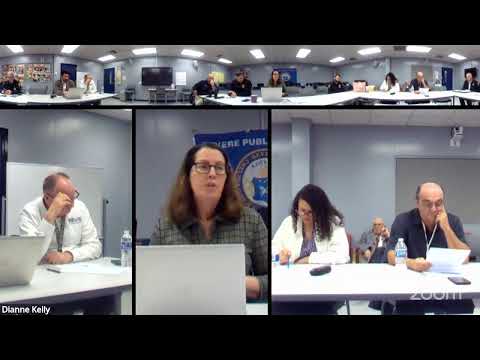
Revere Public Schools officials said Friday that exclusionary discipline — suspensions and emergency removals reported to the state — is down from the past two school years and that the district has engaged Guidepost to conduct a districtwide safety and security audit.
Dr. Kelly, a district administrator, said the district has relied heavily on partnerships with the Revere Police Department and Revere Fire Department and that data prepared by staff show a decline in exclusionary discipline “even if we were to double that number, in each of these categories, we are well below where we were at the end of the school year in the past 2.” The data presentation was given by Chris Bowen, a district staff member who compiled discipline reports pulled for Department of Elementary and Secondary Education (DESE) reporting.
The fall and early-year incidents that drove high suspension counts last year prompted a series of responses, officials said: the district added a fourth school resource officer (SRO), increased restorative-practices offerings and referred some students for court action. Bowen told the subcommittee the district had provided 134 restorative-practices sessions year to date and identified 17 students involved in the initial start-of-year incidents that drove the larger response.
Chief Dave Callahan of the Revere Police Department credited collaborative responses between the department, the schools and juvenile court for helping calm the school climate after the early incidents. “Those two efforts between the police and the school department ... made a huge difference,” Callahan said.
School leaders emphasized that the decline in exclusionary discipline has coincided with more non-exclusionary interventions. Bowen said the district is using alternatives to suspension more frequently and that those sessions are not part of DESE’s exclusionary-discipline counts. “Our exclusionary discipline ... is down; our alternatives to suspension is up,” Bowen said.
Officials also discussed redeploying some SROs back to regular patrol assignments in 2025 while maintaining a daily SRO presence at the high school. Dr. Kelly and Chief Callahan said the departments are preparing a phased return of officers to their patrol duties and that the district will keep officers on site daily at the high school (Officer Singer and Officer Julius were named as continuing daily presences). Two substitute officers were scheduled for a 40-hour SRO training in February to provide coverage when regular SROs are away.
The subcommittee announced a contract with Guidepost to perform a three-part audit of the district’s safety work: a security assessment (document review and school site visits), a safety-and-security plan review (written plan review and alignment with state requirements) and an evaluation of training programs. District administrators said Guidepost’s school-division staff — which the district described as having school experience and behavioral-analysis capability — will visit schools, review existing policies and provide recommendations to strengthen weaker areas. District staff said they will meet Guidepost on Monday to set a calendar for school visits and that the consultant will also advise during design of the district’s new school building.
Officials noted that DESE will review submitted discipline data at the end of the year and that the district may face state scrutiny for last year’s high suspension totals. “They literally just look at the data,” Dr. Kelly said, adding the state review may not capture the local context that, district leaders contend, justified higher suspensions earlier in the year. Another subcommittee member said, “In-school suspension is now illegal,” a point raised to clarify which disciplinary options are available locally.
District administrators also said they will administer a climate survey (identified in the meeting as the MCIEA survey) to students and staff beginning next week in advisory periods; administrators expect that survey to provide comparative data against last year’s results.
Next steps reported to the subcommittee: staff will meet Guidepost to schedule visits and begin the audit; the MCIEA climate survey will be administered in advisory next week; two substitute officers will attend the SRO 40-hour training in February; and the district will monitor DESE’s end-of-year reporting and follow-up. No formal vote or motion was recorded at the meeting.