Get Full Government Meeting Transcripts, Videos, & Alerts Forever!
Get email alerts on the Water Fluoridation topic
No spam. Unsubscribe anytime.
Manatee commissioners direct staff to draft ordinance to stop water fluoridation after public safety debate
Summary
After hours of public comment and expert testimony, the Manatee County Board directed county administration to draft an ordinance repealing the 1991 fluoridation mandate and to return it for future consideration. Speakers on both sides testified on health, ethics and cost; commissioners voted 6-0 to begin the repeal process.
The Manatee County Board of County Commissioners voted to direct county administration to prepare an ordinance to repeal the county's 1991 fluoridation ordinance and to bring that proposed ordinance back for board consideration. The motion, made by Commissioner Amanda Ballard and seconded by Commissioner Bearden, passed 6-0 with Commissioner McCann absent.
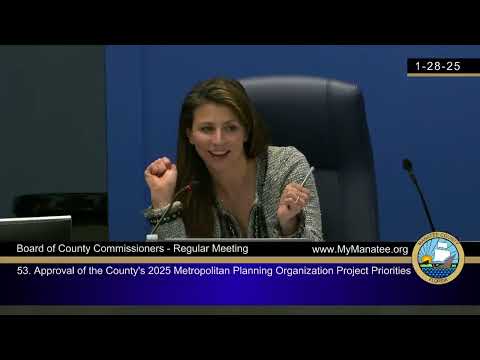
Commissioner Amanda Ballard opened the agenda item by saying the county's fluoridation system has been broken since 2021 and that the existing ordinance (passed in 1991) requires fluoride to be added unless the board acts otherwise. Ballard said the board must now decide whether to repair and resume fluoridation or to pursue a repeal so communities will no longer be medicated via public water.
The meeting drew a long public comment period. Supporters of continuing fluoridation included Dr. Robert Clement, a local dentist of 44 years, and Dr. Steve Tinsworth, a former county dental society president. Dr. Clement told commissioners that community water fluoridation at the previously targeted level of 0.7 milligrams per liter is safe and effective at reducing tooth decay, and said major medical and dental organizations endorse the practice. Dr. Tinsworth urged a careful, workshop-driven approach and asked the board not to make an immediate policy reversal.
Opponents filled several minutes of public comment and cited recent scientific reviews and a federal court finding as reasons to stop. Speakers including Michelle Martin, Martina Mallory (a dentist who said she had changed her view), Bailey Kuykendahl of Stand For Health Freedom and others urged repeal on grounds of informed consent, potential neurodevelopmental risks cited in recent meta-analyses, and the presence of additional fluoride sources (toothpaste, food and beverages). Several callers and speakers also asked how money budgeted for fluoridation was handled while the system was inactive.
Deputy County Administrator Evan Pilachowski told commissioners the county had analyzed the cost to restore the system: replacing the units where they are now would cost about $2 million and take roughly 12 months, while a longer-term capital project building a properly isolated chemical feed room would cost about $1.5 million and take roughly three years. Pilachowski also clarified that the county's recent internal budget figures for fluoridation were in the tens of thousands per year (about $60,000'$80,000 per year for 2021'24 at the county's projected concentration) and not the $500,000 Ballard had referenced from national averages.
Ballard said the county's ordinance requires the board to act because the system has not been operating. Her motion directed county staff to draft an ordinance repealing ordinance 91-38, publish the required notices, and return the draft for board consideration. After the vote, Chair noted the item will return for legal review and public hearing under the county's ordinance amendment procedures.
What happens next: County administration and the county attorney's office will draft the repeal ordinance and a timetable for public notice and hearings; the board asked that staff not delay the work but also to coordinate legal review and public outreach.
Commissioners and staff stressed this decision does not immediately add fluoride back to the system; it only begins the formal process to repeal the county's 1991 fluoridation ordinance. Any restoration of fluoridation would require separate action, budgeting and an implementation plan.
Ending: The board moved on after the vote to the next agenda items; the fluoridation item will reappear as a drafted ordinance for future hearings.