Get Full Government Meeting Transcripts, Videos, & Alerts Forever!
Get email alerts on the Carver Heights Community Park topic
No spam. Unsubscribe anytime.
Recreation and Parks Board previews Carver Heights community park, seeks community input after USO building demolition
Summary
Recreation and Parks staff described a proposal for a Carver Heights Community Park and indoor programming partnerships after the county demolished a World War II–era USO building. Park staff and Save the Village representatives said they will work together on a memorial, programming and a master plan; a modest FY2010 capital request is pending.
The Recreation and Parks Board on Thursday outlined plans for a proposed Carver Heights Community Park on county-owned land near the former Carver Elementary School in Lexington Park, and invited local residents to help shape a master plan.
The county demolished a World War II–era African American USO building that had deteriorated after earlier efforts to stabilize and restore it failed, Recreation Division Manager Arthur Shepherd said. County leaders want to acknowledge the site’s history; staff and the local group Save the Village plan to develop a memorial and a future park on the site, he said.
Shepherd said the department submitted a modest capital request for FY2010 — about $125,000 — intended initially for a playground, picnic amenities and early-stage site work, and stressed the need to develop a community master plan before larger investments. “We do have a capital project that we've submitted for FY10 next year ... we've requested about $125,000 for next year,” Shepherd told the board.
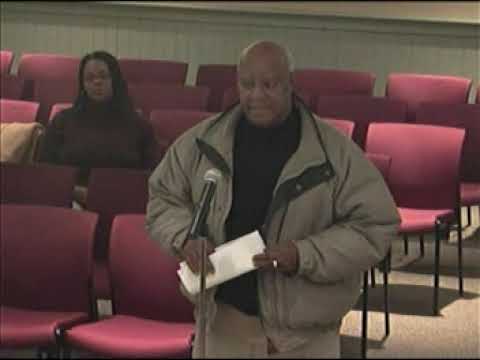
Representatives of Save the Village, including Felton “Pop” Rockwell and Doris McCaskill, told the board they want to partner with the county on programming and to maintain the memory of the USO site. Rockwell said the group had pursued grant funding and community options before the county removed the building. “We did have a grant of $250,000, but the building was bad,” he said, describing disappointment that demolition proceeded quickly.
Shepherd said county staff and Save the Village have discussed partnering on recreational and community-service programming inside the existing Carver Recreation Center, which the department already operates. He also said Recreation and Parks will invite the public to a site meeting either in February or March; staff aim to hold the board’s monthly meeting at the Carver Recreation Center later in that timeframe so residents can meet the board and discuss park priorities.
Shepherd said staff are coordinating a Jan. 22 community meeting focused on indoor programming at the Carver facility and will follow that with a separate meeting on park planning. He said the timing of the community park meeting will depend in part on guidance from county commissioners during upcoming capital budget deliberations.
Pop and McCaskill said Save the Village will continue organizing locally and expects to return with more concrete ideas after the Jan. 22 meeting. Rockwell asked for a formal channel of communication with parks staff and commissioners as the planning moves forward.
The department said the land under discussion is county-owned, formerly surplus Board of Education property, and has been used informally for athletic practice fields. Shepherd said the Recreation and Parks Board will coordinate public outreach, master planning and the capital project timeline with the commissioners and with Save the Village.
Shepherd said the department intends to keep the community informed by distributing flyers and using the department’s outreach channels. He asked Save the Village leaders to share the January 22 meeting and the planned public meeting that will be advertised once a date is set.
If the commissioners direct the capital funds next fiscal year, Shepherd said the proposed FY2010 appropriation would be used for early site amenities and master planning; larger infrastructure and construction would depend on later funding and the master plan outcome.