Get Full Government Meeting Transcripts, Videos, & Alerts Forever!
Get email alerts on the Zoning Home Occupations topic
No spam. Unsubscribe anytime.
Douglas County delays vote on home-occupation zoning changes after debate over vehicle and welding rules
Summary
The county commission deferred action on text amendment AMDT 241001, which would revise home-occupation standards and registration, after extended discussion about prohibitions on automobile painting, upholstering, welding and small-scale industrial activities and requests for clearer enforcement language.
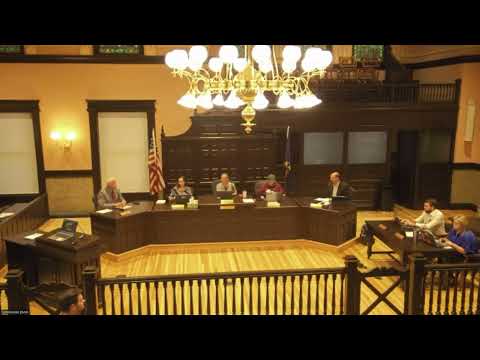
Douglas County commissioners voted 5-0 on Jan. 29, 2025, to defer action on text amendment AMDT 241001, a proposed revision to the county zoning code that would change how home occupations are regulated and registered in unincorporated Douglas County.
The proposed amendment, drafted by Zoning and Codes staff, would make five major changes: treat low‑impact "type 1" home occupations as permitted uses (removing the annual registration requirement), allow type 1 uses to use up to 400 square feet of accessory structures, remove the 5‑acre minimum for type 2 home occupations, change registration from annual to biennial, and remove the 3,600‑square‑foot maximum for accessory buildings used for type 2 operations. Planning staff told commissioners there are currently 115 registered home occupations and at least 57 unregistered operations in the unincorporated county.
Planner Carl Bauer presented the amendment and said staff found the county’s zoning code and the comprehensive plan support permitting many low‑impact home businesses in place of the current, more restrictive approach. "Staff is recommending approval of the text amendment before you and adopting the attached resolution," Carl Bauer said, noting the Planning Commission forwarded an 8‑0 recommendation for approval on Dec. 16, 2024.
Why it was deferred: Several commissioners praised the overall direction of the update but expressed concern about a pair of listing choices in the "prohibited uses" section. The regulation currently lists "automobile painting, upholstering, or mechanical or body repairs" and "welding and machine shops" as prohibited home‑occupation activities. Commissioner Anderson and others argued that the distinction between permitted and prohibited mechanical work can be arbitrary in practice, and that enforcement should focus on impacts — traffic, noise, odor, exterior storage — rather than categorical exclusions based on activity type.
Zoning and codes director Tanya Voigt told commissioners some exclusions were carried forward from existing rules and cited enforcement challenges. "Noise, vibration, electrical interference, smoke, odor, or particulate matter emission that is perceptible beyond the property line is prohibited," she said, explaining the department’s concern that certain automotive and industrial activities are difficult to reconcile with neighbor protections.
Several commissioners asked staff to return with clearer language that preserves safeguards for neighbors while providing a practical permitting pathway for low‑impact, small‑scale mechanical or welding work that occurs incidentally. Commissioner Dorsey moved to defer action to allow staff to consider specific revisions (including revisiting the upholstery exclusion and the auto/welding items) and to consult legal counsel about whether any modifications would require Planning Commission re‑review; Commissioner Anderson seconded. The motion carried 5‑0.
Key facts and clarifications discussed at the meeting: - Staff said the existing appeals process for denials was unchanged and rarely used; appeals would come to the Board of Commissioners and the board could appoint a hearing officer if needed. - "Habitable space" in the draft is defined as in the building code and is intended to make enforcement more straightforward; staff said they would not be measuring rooms with a tape measure routinely, but used the definition as an illustrative enforcement threshold. - Staff noted many adjacent counties also prohibit certain automotive and industrial uses as home occupations; the draft largely carries forward those prohibitions while easing other requirements. - Proposed changes aim to modernize rules for internet‑based and accessory‑structure home businesses (examples: online craft sellers, small professional home offices).
Next steps: Staff will return with revised language addressing the commissioners’ concerns and with legal counsel guidance on whether adjustments are substantive enough to require Planning Commission reconsideration. The board instructed staff to examine noise language and the upholstery prohibition and to develop clearer standards or definitions for "limited," "temporary" or "occasional" activity if that is the board’s desired approach.
Why it matters: The amendment would change registration and permitting burden for dozens of small businesses and clarify pathways for currently unpermitted operations. Commissioners emphasized balancing business flexibility in rural areas with neighbor protections and consistent, enforceable standards.