Get Full Government Meeting Transcripts, Videos, & Alerts Forever!
Get email alerts on the Labor Executive Session topic
No spam. Unsubscribe anytime.
Commissioners enter executive session to discuss AFSCME grievance, citing state open‑meeting law
Summary
The Norfolk County commissioners voted to go into executive session under Massachusetts General Laws chapter 30A to discuss strategy related to a grievance filed by the Norfolk County registry unit, AFSCME Council 93 Local 2417. The meeting returned to open session with no public action reported.
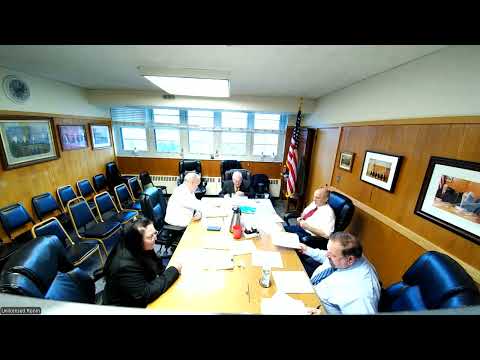
NORFOLK COUNTY, Mass. — At the start of its Jan. 29, 2025 meeting the Norfolk County commissioners voted to go into executive session to discuss collective bargaining strategy and litigation related to a grievance filed by the Norfolk County registry unit, AFSCME Council 93 Local 2417.
The chair invoked Massachusetts General Laws chapter 30A. Section 21(a)(3), saying an open meeting could have a detrimental effect on the county’s bargaining or litigation position. The motion, as presented by Commissioner Collins, to enter executive session for that purpose was seconded by Mr. Smith. A roll-call vote was taken; the commission recorded affirmative votes and recessed into executive session. The board later returned to the regular public meeting.
The transcript records that the executive-session motion referenced both subsection (a)(3) (strategy related to collective bargaining and litigation) and subsection (a)(2) (to hold a grievance meeting), and specifically named the Norfolk County registry unit, AFSCME Council 93 Local 2417. The meeting record does not disclose further details of the discussion held in executive session, nor does it show any final public vote or settlement reported on the record after the closed portion.
Because the matter was discussed in executive session, the public transcript contains only the motion to convene the closed session and the roll call; no substantive bargaining positions or litigation strategy are disclosed in open session.