Get Full Government Meeting Transcripts, Videos, & Alerts Forever!
Get email alerts on the Economic Development topic
No spam. Unsubscribe anytime.
St. Mary’s County EDC focus group urges diversification, flags workforce and infrastructure gaps
Summary
At a Sept. 17 meeting, St. Mary’s County Economic Development Commission members reviewed consultant briefings and recommended the county prioritize economic diversification, workforce pathways and infrastructure to offset federal spending cuts.
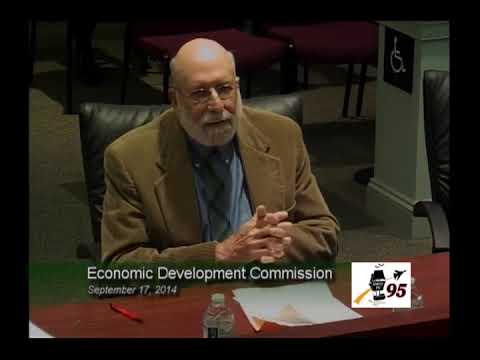
St. Mary’s County Economic Development Commission members spent much of their Sept. 17 meeting reviewing consultant briefings and a focus‑group exercise aimed at shaping the county’s Strategic Economic Development Strategy (SEDS). Commissioners and consultants agreed the county needs to diversify its economy beyond federal contracting, address workforce and infrastructure gaps, and translate analysis into an actionable plan with targeted outreach.
Commissioners said briefings from the Regional Economic Studies Institute (RESI) and the University of Maryland confirmed that sequestration and federal spending cuts had real local effects, even as some indicators showed resilience. The group identified several priorities for the SEDS plan: diversify industry sectors, strengthen career pathways and training, inventory land and infrastructure, and examine public incentives and regulatory barriers at the state level.
Why it matters: St. Mary’s County’s economy has a high concentration of federal government and defense spending. Commissioners and consultants emphasized that a plan that only restates assets will not be sufficient; the county needs a detailed, implementation‑oriented strategy that identifies which sectors are most likely to succeed locally and the specific investments required to attract and support them.
Discussion highlights and recommended actions included:
- Diversification and risk: Multiple commission members said the county remains heavily dependent on federal contracting and defense activity. Commissioners noted the county experienced a de facto “double hit” when national recessions were followed by federal cutbacks, and they urged the SEDS to focus on reducing dependence on a single funding source.
- Workforce and talent retention: Members identified the 22‑to‑35 age cohort as a problem area: many young professionals take early‑career positions here but cannot afford to stay long term. Commissioners called for clearer education and career ladders tied to local employers, expanded post‑secondary options (including bachelor completion programs) and local training so employers do not need to send workers to other regions for credentials.
- Business competitiveness and costs: Local contractors and manufacturers described rising overhead and bid costs, and said out‑of‑town firms are undercutting local bidders because of lower operating costs elsewhere. Commissioners asked the SEDS team to analyze the county’s cost structure and compare incentives and tax policies with competitor regions.
- Infrastructure and land: Members asked for an inventory of available industrial and commercial land, utilities and broadband capacity and for an assessment of what it would take to host larger employers (for example, large‑scale manufacturing). Zoning, stormwater rules and state legislative limits were raised as constraints the plan should address or work around.
- Sector‑focused outreach and inclusion: Commissioners recommended targeted interviews and focus groups with industry sectors (agriculture/seafood, health care, tech, tourism, manufacturing) and with representative stakeholder groups (farmers, watermen, young professionals, small‑business owners) to ensure minority perspectives and non‑contracting sectors are included.
- Implementation tools: The commission said the SEDS should move beyond a vision statement to a five‑year action plan with clear benchmarks, responsible parties and funding sources. Members asked the consultants to identify practical incentives, capital options for start‑ups and promising clusters the county could realistically attract.
Next steps and deliverables discussed: The University of Maryland project team expects to produce a county‑level network analysis and other preliminary findings for public presentation on Oct. 15. Commissioners were told the SEDS will include targeted sector interviews and focus groups (planned for winter, with a February window discussed) and that the plan will be benchmarked every five years.
Implementation pilots noted at the meeting: The commission is supporting commercialization efforts by providing “pro” memberships to CoFounders Lab for local firms, and offering memberships to PacSpace (a local maker space) and the county’s technology transfer office to help connect inventors with investors and market support. DVDs of prior presentations will be distributed to commissioners ahead of future briefings.
At the meeting the commission also approved routine procedural items and confirmed leadership selected via an earlier electronic survey: Richard Grama as chair (survey result cited as 67%), Tom Watts as co‑chair (71%), and Tracy Harris as secretary (100%). Motions to approve minutes for the June, July and August meetings passed by voice vote. The meeting adjourned by motion.
Commission members and the consultant team asked that the SEDS be action‑oriented and inclusive of nonfederal sectors so that the county can both retain its base advantages and develop new sources of employment and private investment.