Get Full Government Meeting Transcripts, Videos, & Alerts Forever!
Get email alerts on the Encampment Enforcement Safety topic
No spam. Unsubscribe anytime.
Residents press Salem officials to strengthen enforcement after woods fires linked to encampments
Summary
Residents told city officials that tents and campfires in Salem Woods contributed to dangerous conditions during October fires; police and councilors said a recently adopted no-camping ordinance was aimed at a downtown encampment and will be re-examined to address woods camping and enforcement gaps.
Residents at a Salem public meeting urged stronger enforcement and ordinance changes after tents and reported campfires in Salem Woods coincided with October brush fires.
Several residents described seeing two people camped within about 100 feet of condominium units in the Cloisters and along First Street and said the presence of the encampment created safety and fire risks. Tim Walker told officials, "I have 2 homeless people that live in the woods, probably about a hundred feet, from my unit," and said his wife felt unsafe when he was not home.
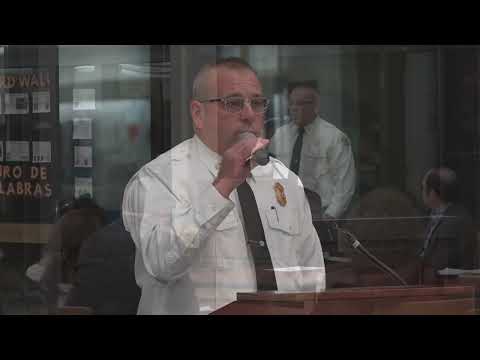
Police Captain John Burke and Police Chief Lucas Miller described enforcement limits. Burke said officers and the Community Impact Unit have worked to move people into transitional housing when possible and are pursuing no-trespass remedies where property is private. Miller said investigation and enforcement can be difficult on public land and that investigators must often "catch them in the act" to remove people who repeatedly reestablish camps. "I don't know how these fires started," Miller said, "but I think it's a distinct possibility that somebody with a campfire was responsible."
Officials pointed to a recently drafted city ordinance banning camping on public property, which was written to address a downtown encampment and has a 72-hour notice provision for established sites. Several residents said that provision allows people who are asked to move to shift short distances and restart camps, and urged the council to revisit the timeframe and penalties. Councilor John Harvey acknowledged the ordinance'was narrowly targeted and said he will solicit councilors' views on possible changes.
Private property managers said trespass tools are available where land is privately owned and encouraged posting and no-trespass orders in those cases. City staff said housing authority and private-property remedies exist but that clearing public woods or removing debris on public parcels is costly and complex. Community Impact staff said they have had success placing some people into housing but acknowledged the problem is multifaceted, involving homelessness, mental health and substance-use issues.
Residents also proposed short-term mitigation such as trimming overhanging branches abutting private lots, creating small fuel-breaks near housing, and coordinating volunteers for targeted debris removal. Officials said homeowners may trim branches that overhang private property lines and that the city would take mitigation suggestions to the Public Services Department for review.
City officials said they will review the camping ordinance and enforcement options with the council and neighborhood stakeholders. They also asked residents to sign up for CodeRed to ensure rapid emergency notifications.