Get Full Government Meeting Transcripts, Videos, & Alerts Forever!
Get email alerts on the Wildfire Response Preparedness topic
No spam. Unsubscribe anytime.
Salem officials outline response, training and equipment plans after October wildland fires
Summary
Mayor Dominic Pangalo, Fire Chief Allen Dion and Police Chief Lucas Miller reviewed the October brush-fire response, described mutual‑aid operations and said the city will invest in radios, training and other resources to prepare for recurring wildland fires.
Salem officials reviewed the October wildland fires and the city's response at a public meeting, and outlined investments and training intended to improve future response.
Mayor Dominic Pangalo said the city leaned heavily on regional mutual aid during the October fires and is directing federal relief toward public-safety communications. "We have been using our American Rescue Plan Act funds'... just over $3,000,000 for a public project to completely upgrade that system to an entirely new system," Pangalo said, referring to an overhaul of Salem Police and Fire radio equipment.
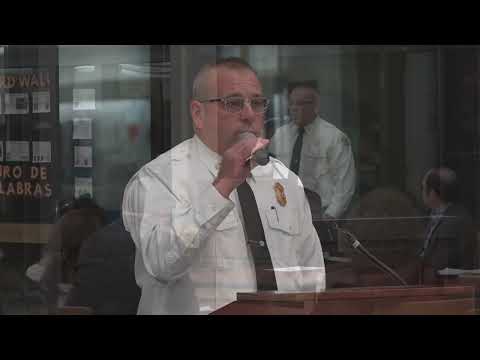
Fire Chief Allen Dion gave a timeline of the incident, describing multiple simultaneous fires that began the morning of Oct. 26 and required task forces, air support and unified incident command. Dion said mutual aid brought dozens of apparatus and personnel that Salem does not keep in an urban fire station, including brush trucks, tankers and an air wing. He said crews worked under difficult terrain and wind conditions and that smoke persisted for weeks: "The most important thing is we had no injuries."
Officials said the fires exposed capacity limits when many North Shore and regional departments were responding to simultaneous incidents. Dion said state mobilization plans and the Department of Fire Services'coordination prevented a broader breakdown but added the region came close to needing out-of-state assets. "It was determined that we weren't too far from our breaking point," he said.
Police Chief Lucas Miller described support roles the department provided, including traffic control and limited aerial surveillance with a police drone equipped with a heat-signature camera. He also urged residents to sign up for the city's emergency notification system, CodeRed, and explained that door-to-door evacuation remains the ultimate method when life is at risk: "When there is life threatening danger... an officer or a firefighter will come and make absolutely sure that a structure [is evacuated]."
Officials described planned and already underway changes: expanded wildland training in partnership with the Department of Conservation and Recreation (DCR) in spring; consideration of specialized brush and tanker equipment as part of capital planning; and a multi-million-dollar radio upgrade funded from Salem's American Rescue Plan Act allocation to improve interoperability. Dion said the department added urban-forestry training language to its recent labor contract in direct response to the fires.
Residents asked about fuel reduction and landscape mitigation in the woods behind neighborhoods. City and department officials encouraged homeowners to keep vegetation and debris away from foundations and to avoid placing bark mulch against siding, and they acknowledged major land-management work on public and private parcels would be costly and complex. Dion said state and federal resources, plus regional partners, will be part of any sustained mitigation and training effort.
The meeting closed with officials saying more after-action reviews will inform capital and training decisions, and that further public outreach is planned.