Get Full Government Meeting Transcripts, Videos, & Alerts Forever!
Get email alerts on the Parking Policy topic
No spam. Unsubscribe anytime.
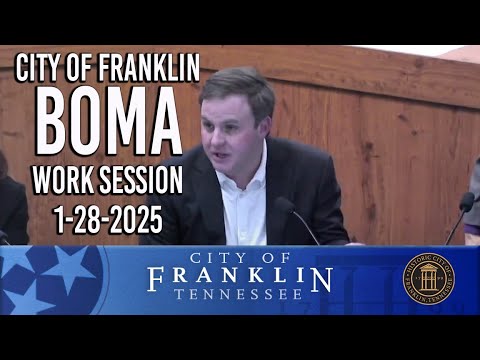
Franklin aldermen approve paid-parking requests for two downtown lots after debate over employee parking
Summary
The Board of Mayor and Aldermen considered two paid-parking requests for privately owned lots downtown and approved the applications with the staff-recommended option after an extended discussion about employee parking, enforcement and downtown parking strategy.
The Board of Mayor and Aldermen on Jan. 28 considered two resolutions to permit paid parking on privately owned lots near downtown and moved forward with the staff-recommended option for both parcels after aldermen debated employee parking and enforcement.
The discussion centered on how allowing paid parking affects overall downtown parking supply and whether employees working at businesses that use paid lots would be displaced to free public spaces. Alderman Caesar said the board should weigh the effect on employees if businesses convert private lots to paid spaces: “My belief is if there’s only 43 spots and you’re running a restaurant, it’s likely that you’re going to have a number of employees… that will need to park somewhere.”
The board heard from Marla Albert, a restaurateur whose business is adjacent to one of the lots, who described how the proposed paid-lot plan would work for patrons and staff. Marla Albert, owner and chef, said the business will provide short-term parking for customers via a QR-code arrangement with an adjacent parking operator so patrons can get two hours free, while after-hours or extended parking would be charged.
Staff and aldermen repeatedly raised enforcement and precedent concerns. Eric, a city staff member, said the city could not realistically enforce employee-only parking and that enforcement would largely rest with private lot owners. Alderman Baggett and Alderman Burger urged a longer-term downtown parking strategy, including options such as employee shuttles and shared parking facilities, and suggested limited trial periods and follow-up reviews of paid-parking policies.
The board’s discussion also referenced prior 2019 policy changes that allowed paid parking to count toward parking requirements; several aldermen said that decision contributed to the proliferation of paid lots downtown and recommended a coordinated strategy instead of piecemeal approvals.
The resolutions on the agenda asked the board to approve paid parking at two addresses and choose “option 3” as written; the transcript does not record an explicit roll-call vote or tally for those items, only that the items were discussed and advanced on the agenda.
The board directed staff to include the paid-parking proposals in their process, and several aldermen requested that the city incorporate long-term parking policy and employee-parking solutions into a broader transportation study now underway. Alderman Burger specifically recommended revisiting the approvals in three to five years to assess effects and adjustments.
The board also allowed a two-minute public comment from the property owner and business representatives, who described operational details and customer parking plans. Staff said they would continue coordinating with the downtown stakeholders and the city’s transportation study.