Get Full Government Meeting Transcripts, Videos, & Alerts Forever!
Get email alerts on the Land Disposition topic
No spam. Unsubscribe anytime.
Council committee votes to enter negotiations with City of Charleston for 993–995 Morrison Drive; staff pursuing Planned Development amendments
Summary
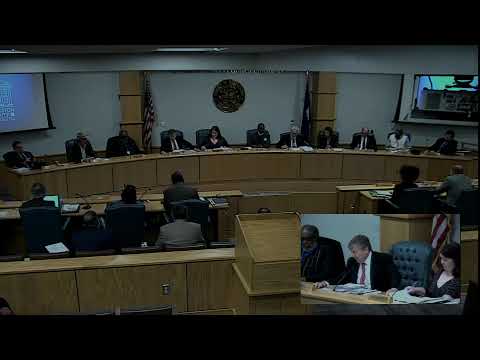
The Charleston County housing committee on Jan. 14 voted to enter negotiations with the City of Charleston to sell county-owned parcels at 993 and 995 Morrison Drive for an amount to be negotiated between $30 million and $35 million.
The Charleston County housing committee on Jan. 14 voted to enter negotiations with the City of Charleston to sell county-owned parcels at 993 and 995 Morrison Drive, with an amount to be negotiated between $30 million and $35 million and the understanding that some proceeds would be used for affordable and workforce housing.
The committee motion, read by the clerk, said the sale negotiations would be based on the offer received from the city and that final negotiations would require county council approval. Chairman Kylan Middleton made the motion; Councilman Herb Sasse seconded. The motion passed on a committee roll call, recorded as five ayes.
Why it matters: The parcels are governed by the Laurel Island planned development (PD). Staff and consultant Seamon Whiteside presented proposed PD amendments and development scenarios the county and city have discussed to increase residential density, adjust height and massing, and remove an existing Tech Corridor overlay that would have required substantial office use.
County planner Mary Tuil (presenting with Seamon Whiteside) summarized the preferred alternative as a context-sensitive but higher-density option. "We are looking at upwards of 1,440 units with 80% of that being workforce housing," she said, describing stepped building heights to meet neighborhood edges and taller buildings along the more urban side of the parcel. The current PD allocation for the parcel listed about 305 multifamily units; the staff scenarios ranged from roughly 1,200 to 1,440 units depending on articulation and design.
Tidal and regulatory constraints were highlighted: staff showed a limits-of-moderate-wave-action line that produces a required minimum finished-floor elevation of about 14 feet, meaning ground-level space would be limited to parking, public open space or art rather than ground-floor retail or residential. Staff also proposed increasing retail square footage in the PD revisions (from about 26,550 square feet to roughly 53,000 square feet) and removing a prior Tech Corridor overlay that had called for up to 50% office use.
Council members pressed on valuation, timing and outcomes. Committee members and staff recited differing appraisals and scenarios: staff cited a county appraisal scenario as high as $38 million under a maximum-development assumption; the city’s current offer on the table was $30 million. Committee members discussed the trade-off between receiving cash sooner from a municipal buyer versus pursuing an RFP process to a private developer, which staff warned could involve long due‑diligence periods (one or more years) and uncertainty.
Several council members also asked about mechanisms to secure affordability if the county sells the land to the city. Staff and council discussed deed restrictions or contract provisions as tools to lock in affordable or workforce housing requirements; the transcript records a request that such protections be considered during negotiations.
Ending: The committee vote to enter negotiations passed and was forwarded to the finance committee and later recorded by the full council as part of committee recommendations. Staff said draft PD amendments and revised plan documents are ready to be circulated to council for review.