Get Full Government Meeting Transcripts, Videos, & Alerts Forever!
Get email alerts on the Housing Enforcement topic
No spam. Unsubscribe anytime.
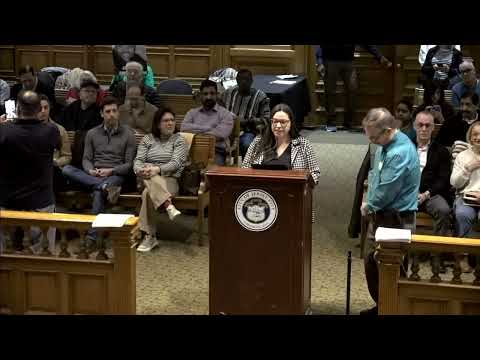
Tenants, advocates renew calls for stronger enforcement of rent and building codes at Jersey City council meeting
Summary
At a lengthy public‑comment period, tenants and organizers described ongoing habitability and security problems, accused some landlords of harassment, and urged the council to enforce Chapter 260 and other codes; Portside tenants asked the city to require uniform security and on‑site superintendents.
Dozens of residents and tenant organizers used Jan. 29, 2025 public comment time to press the Jersey City Municipal Council for immediate enforcement of landlord‑tenant laws, better funding for tenant services and stronger oversight of large residential complexes.
Speakers repeatedly singled out enforcement gaps in Chapter 260 (the city’s landlord‑tenant and habitability code) and called on the council to create a staffed tenant‑advocacy or enforcement unit. A string of tenants described months‑long heating outages, broken elevators, vermin infestations, alleged harassment and building security failures. Several speakers identified Portside Towers (Portside West) as a continuing concern and said management had not complied with uniform security requirements written into local code.
Tenant organizer Jessica Brand framed the night as a “people’s state of the city,” calling for accountability and a public record of enforcement. Massab (speaker identified in the record by first name) urged the council to “think boldly” about rent stabilization and enforcement and to prioritize preventing displacement. Multiple speakers asked the council to professionalize and staff the Rent Leveling Board and to investigate complaints of “algorithmic” rent increases used by third‑party software vendors.
Several speakers named individual landlords or companies and said enforcement was inconsistent: Anna Bassett said her landlord had left tenants without heat and used intimidation tactics; Anna M. and others described heating and sanitation problems and long administrative backlogs for petitions under Chapter 260. A speaker identified as Eve attributed a large sum—about $26 million—to unenforced building and fire code fines and called for recovery and enforcement; that figure was presented as the speaker’s statement and has not been independently verified by the council during the meeting.
Public safety and security were also raised: Portside tenants and others said doors were propped open, garage access was unsecured and prior recommended camera upgrades were not implemented. Multiple speakers asked the council to enforce existing uniform‑security ordinances and to require on‑site superintendents.
Council response and next steps: Several councilmembers acknowledged long‑standing problems and encouraged residents to use council office contacts; one councilmember asked for the council to retain outside legal counsel to represent the council’s legislative position in ongoing Portside litigation. The council asked staff to follow up with specific tenant complaints and to report back; no new ordinances were enacted at the meeting.
Why it matters: Tenants argued that failures of code enforcement and inconsistent prosecution of housing violations shift the burden of compliance onto residents. Organizers asked the council to treat enforcement and tenant services as active city priorities rather than administratively backlogged matters.
What residents asked for (summary): a professional, funded tenant‑advocacy/enforcement unit; expedited inspections and follow‑up on open Chapter 260 petitions; stricter enforcement of uniform security requirements for large residential buildings; transparency on fines collected and action on outstanding warrants; and a publicly accessible register of rent‑controlled units and filings.