Get email alerts on the Governance Board Assignments topic
No spam. Unsubscribe anytime.
Multnomah County commissioners receive board and external‑body assignments
Summary
At a board briefing, county leaders outlined commissioner portfolios and alternate appointments for Multnomah County representation on regional and advisory bodies.
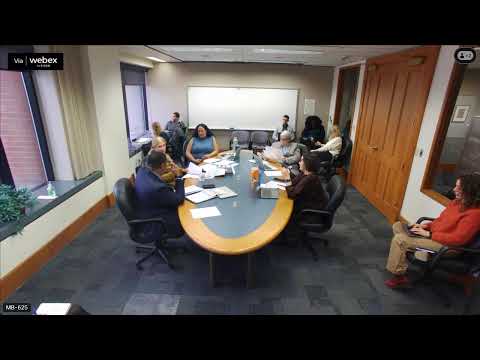
Multnomah County commissioners on Monday reviewed formal board assignments and appointments to regional advisory bodies and commissions, the presiding official said at a work‑session briefing.
The assignment roster, read into the public record by the meeting presider, names district assignments and seats on committees and partner agencies. Commissioners were assigned to advisory councils and intergovernmental bodies that include homelessness and social services forums, transportation committees and cultural and housing advisory panels.
The document places a strong board emphasis on social services and homelessness response. The presider described District 1’s portfolio as focusing on social services and representation on aging and disability advisory councils, the county trafficking collaborative, the Gateway Center for Domestic Violence Council, the Portland Children’s Study and the Mount Hood Cable Regulatory Commission. District 2’s commissioner was assigned to homelessness and housing‑related bodies, new urban flood and water quality forums, transportation advisory groups and a veterans task force. District 3 retained seats on disaster preparedness and audit panels and was given new leadership roles in public safety, economic development and the county’s visitors’ and convention advisory boards. District 4 was assigned to regional arts, library advisory and workforce and economic development groups and to multiple Metro and transit advisory bodies.
The presider also named a set of alternates for bodies that require them: Commissioner Moyer as Greater Portland Inc. alternate, Commissioner Singleton as MPAC alternate, Commissioner Brim‑Edwards as a backup on the SHS oversight committee, and other alternates for regional transportation and transit advisory groups. The chair said the assignments were intended to ensure county representation at partner tables and to make explicit how commissioner work at outside bodies would feed back into county priorities.
The briefing included a procedural note that the chair will schedule regular check‑ins to confirm commissioners’ capacity to serve on assigned boards and to adjust assignments if workload becomes excessive. The chair said these assignments are only one part of each commissioner’s responsibilities and stressed the expectation that commissioners report back to the full board so other members and the public can track work at external tables.
The board clerk and staff were asked to publish the assignment list and to circulate it to commissioners for any written edits before posting.
Ending
Commissioners agreed to follow up on details and to use regular reporting slots at future briefings so that committee work is visible to the full board and the public.
AI generated
The text on this page is AI generated. Summaries, highlights, analysis, and video transcripts are all produced from the original source material.
AI can make mistakes, so if you spot one, and we will fix it for everyone.
Note: the source content is unaltered by us. Any content source we link to, be it a video, an audio recording, or a document, is presented exactly as its publisher released it. That publisher is usually a government body, sometimes an individual official or another organisation.