Get Full Government Meeting Transcripts, Videos, & Alerts Forever!
Get email alerts on the Land Bank Mou topic
No spam. Unsubscribe anytime.
Detroit residents and council members press for changes to Land Bank MOU as public comment floods session
Summary
Public commenters and multiple council members urged denial or major revision of the Detroit Land Bank Authority memorandum of understanding, citing alleged misconduct, lack of transparency and housing impacts; council sent the item back to the Planning and Economic Development committee for further negotiation.
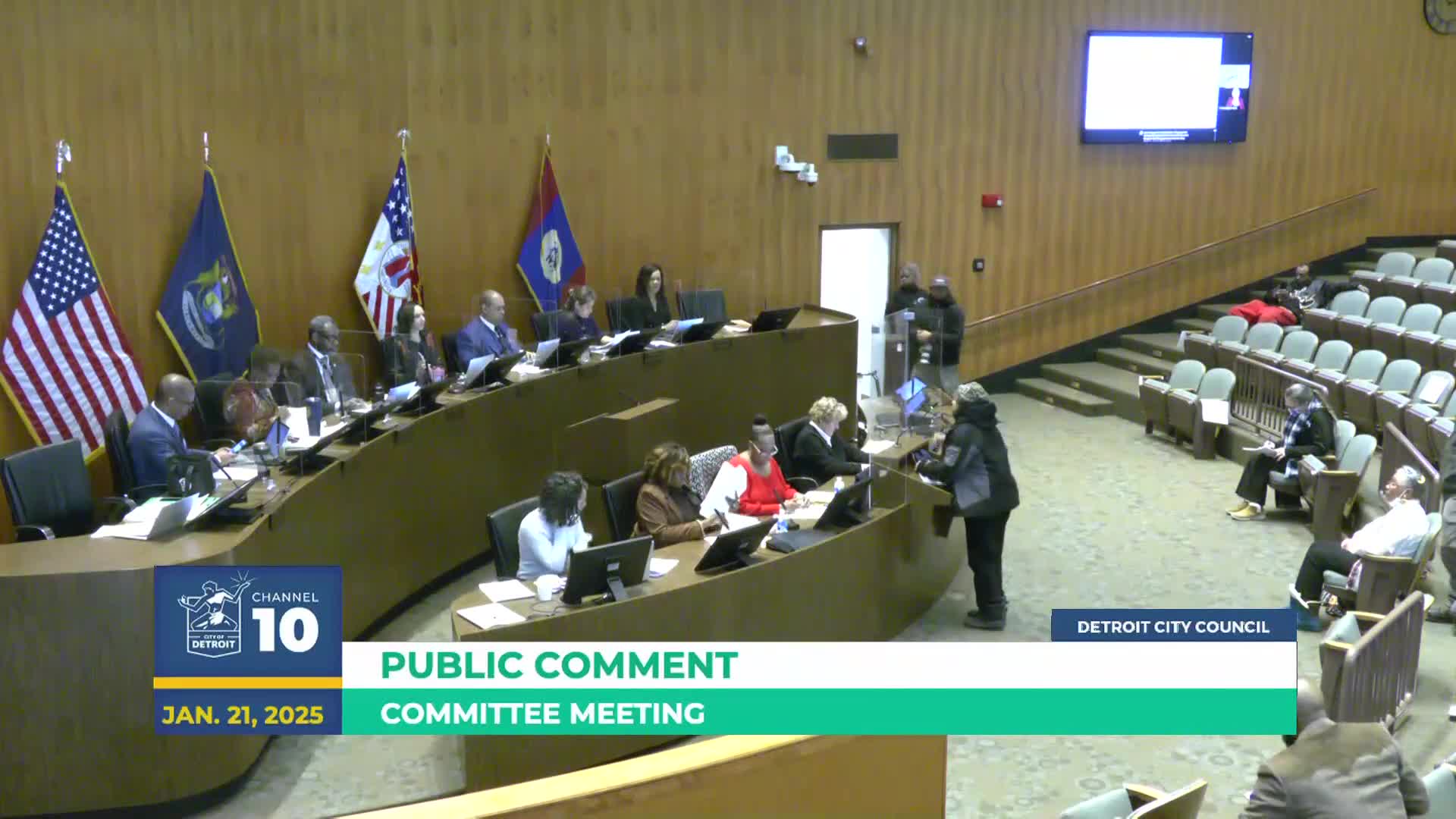
Dozens of Detroit residents urged the City Council on Jan. 21 to reject or substantially alter a proposed memorandum of understanding that governs the relationship between the city and the Detroit Land Bank Authority.
The issue dominated public comment and council debate, where speakers accused the land bank of hoarding parcels, disadvantaging longtime Black homeowners and failing to maintain property. After extended public comment and debate among council members, the council voted to send the MOU back to the Planning and Economic Development standing committee for further negotiation rather than approving it at formal session.
Why it matters: The land bank controls tens of thousands of formerly tax-foreclosed parcels within Detroit. The MOU sets the practical terms under which the authority operates with city oversight and access to city-funded programs; critics said the current draft does not provide adequate protections for residents or sufficient transparency.
Public comment focused on allegations of unequal treatment and property loss. Adam Barrett of Detroiters for Tax Justice said, “The land bank has constantly been in the news for scandals. The Ombudsman has recorded more complaints about the Land Bank than any other entity.” Barrett and several other speakers urged the council to “reject the MOU, dissolve the land bank and put its assets in trust for Black reparations,” language he used in his remarks.
Other callers gave local examples. Whitney Clark, a District 5 resident, said she believed the land bank took back more homes than it sold last year and called for a shorter contract term, noting the city lacks capacity to manage a sudden transfer of many parcels back to municipal control. Jerome Shell, a precinct delegate, described a dispute over a specific parcel he said had been taken from him and asked for a council follow-up.
Council debate focused on whether the body could amend the draft at the dais and how to proceed. Council President Pro Tem James Tate summarized past committee work and urged a negotiated approach: the committee will collect members’ amendment requests and submit a resolution spelling out council priorities for the MOU, he said.
City staff and legal advisers explained limits on unilateral changes. Director Whitaker said, “You can't unilaterally amend a contract. This is a contract,” and described the MOU as a negotiated instrument requiring agreement among the city, the land bank and the administration. Detroit Land Bank Authority Director Daniels told council members the land bank has operated “under the terms of the recently expired MOU” since Dec. 19, 2023, and said the authority was willing to negotiate in good faith.
Several council members said they will press for specific protections. Council Member Mary Waters said the version before the body “does not work” for Detroit and that she planned to vote against final passage if it returned as-is. Member Santiago Romero and Member Durhall also said they favored returning the item to committee to craft a single resolution listing the council's desired changes. At the session’s close, the council chair announced: “Hearing no objections, this item will go back to planning and development committee.”
Context and next steps: Speakers from multiple community groups and individual residents called for shorter contract terms, independent audits and greater requirements that the land bank prioritize nearby neighbors, long-term Detroit residents and affordable housing outcomes. Council members directed staff to compile members’ requested amendments and to work with the administration and the land bank on a resolution for committee consideration. The Planning and Economic Development committee will schedule follow-up hearings and solicit formal amendment language for negotiation.
Ending note: Because the council sent the item back to committee, no final vote on the proposed MOU occurred at this session; council members and the land bank said they are prepared to continue negotiating a version that reflects the council’s committee-level priorities.