Get Full Government Meeting Transcripts, Videos, & Alerts Forever!
Get email alerts on the Transit Stif Plan topic
No spam. Unsubscribe anytime.
Yamhill County approves 2025–27 STIF plan; transit to add frequency, start fares in July
Summary
The county commissioners voted to adopt the 2025–27 Statewide Transportation Improvement Fund plan, a biennial funding and service blueprint that includes a conservative $125,000 annual fare revenue estimate, additional fixed‑route trips, cuts to demand‑response hours and a $5.405 million STIF allocation for the biennium.
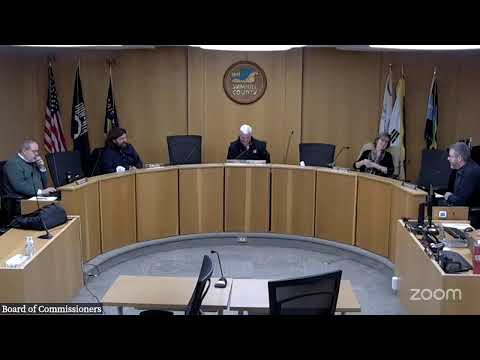
Yamhill County commissioners on Jan. 16 approved the county’s 2025–27 Statewide Transportation Improvement Fund (STIF) plan, authorizing staff to submit the application and carry out an array of service, capital and policy changes for the county public transportation system.
The plan, which Cynthia of Yamhill County Transit presented to the board, consolidates federal, state and local projects into a single biennial program totaling $12,623,000 and identifies $5,405,000 in STIF funds for the coming two‑year period. Cynthia told the board she used conservative carryover numbers from the county’s most recent STIF audit and estimated fare revenue at $125,000 per year once a new fare system is in place.
Why it matters: the adopted plan guides which routes, capital projects and match strategies the county will prioritize for upcoming grant cycles. It contains both operational changes — including higher frequency on some routes and reductions in demand‑response hours — and capital work such as renovations at the Durham Lane Transit Center.
Cynthia said the transit program has selected a fare collection system and expects the fare policy and vendor implementation to be in place by the end of the fiscal year, with collections starting in July: “I think we’ll be done with all of our process. You’ll adopt the plan. We’ll have the ticketing system in place…so I think we’ll start collecting in July,” Cynthia said. She explained the county’s chosen system relies on QR codes and requires little new on‑vehicle hardware; once a contract is executed the vendor estimates about 10 days to set up the system.
The plan assumes $125,000 a year in fare revenue as a conservative estimate, Cynthia said: “In the STIF plan, I put in a pretty low estimate for how much fare revenue we would bring in… So the STIF plan has a 125,000 in revenue each year.” Commissioners were told the fare policy and final pricing will require additional public outreach and, for changes above roughly 20%, formal hearings or public meetings.
Service changes described in the plan include adding several trips between McMinnville and Newberg on the busiest intercity corridor (Route 44 in the plan), and converting the two busiest local McMinnville routes to roughly 30‑minute frequency in opposite directions to improve convenience. To pay for increased fixed‑route frequency the plan reduces county general public demand‑response service hours substantially; Cynthia described that reduction as “probably half of the hours we have currently for demand response.” She said the change is aimed at shifting riders who can use fixed routes onto more frequent service.
The plan also reflects new and expanded partnerships: Washington County is contributing funds toward Route 33 (Hillsboro service), and planning is underway with Benton County and a private provider to expand service between Junction City and McMinnville with potential connections to downtown Salem.
Capital and facilities work listed in the plan includes renovations at the Durham Lane Transit Center. Cynthia said a procurement error required reissuing specifications; staff expect to post procurement documents by the end of February, accept bids in March, and carry out construction in summer with vendors estimating three to four months to complete the work. Planned transit center improvements discussed include new restroom fixtures with push‑button access monitored from the dispatch office, planter boxes and interior repairs intended to discourage encampments and improve safety and cleanliness.
Cynthia emphasized that STIF is one part of the funding mix and the plan compiles all federal, state and local funding by project to make matching and budgeting clearer. “The entire document is $12,623,000…89 is what the STIF funding is. There’s $5,405,000 in STIF money in this next biennium,” she said, adding the state’s STIF guidance asks qualified entities to list projects at roughly 130% of expected funding to account for uncertainty.
Board members asked about veterans transportation, outreach and how the plan mitigates the operational cost increases Cynthia said the plan accounts for likely higher provider rates and, where possible, shifts more funding into administrative and capital categories that carry lower match requirements. Cynthia also noted the STIF advisory committee recommended the board approve the plan and authorized staff to submit the application; the board voted to approve the plan that same day.
Ending: With board approval staff were authorized to submit the STIF application and proceed with the fare policy work, procurement and the schedule spelled out in the plan. Commissioners and transit staff indicated they will return with more detailed materials and public‑engagement steps before finalizing fare levels or implementing the larger service changes.