Get Full Government Meeting Transcripts, Videos, & Alerts Forever!
Get email alerts on the Wildlife Corridors topic
No spam. Unsubscribe anytime.
Committee sends wildlife-corridor bill (HB 2025) to appropriations after amendments, 6–4
Summary
HB 2025 expands the Wildlife Corridor Action Plan, directs DCR and VDOT coordination on wildlife crossings and includes line amendments clarifying grant pursuit, funding mechanisms and carcass disposal language; committee voted 6–4 to refer as amended to Appropriations.
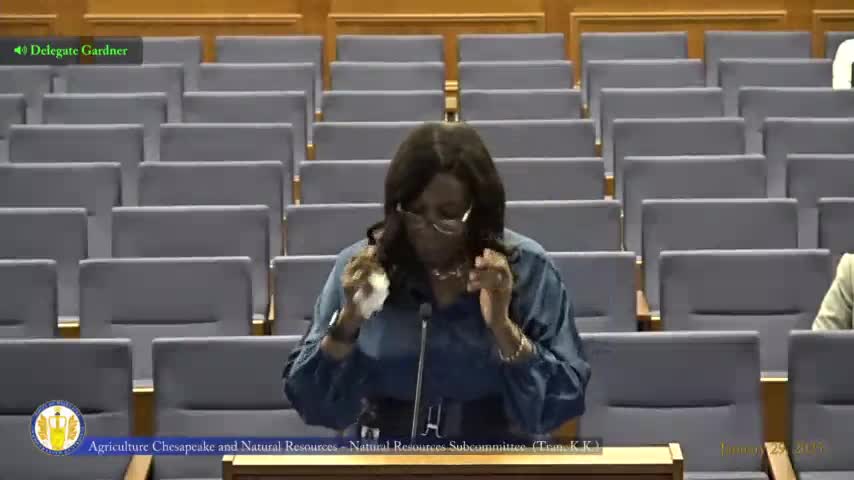
Delegate Doug Gardner presented HB 2025 to expand the existing Wildlife Corridor Action Plan and direct several state agencies to advance wildlife crossings and wildlife-friendly design in flood-resilience projects.
Gardner said the bill builds on work by the Department of Wildlife Resources and asks the Department of Conservation and Recreation to encourage wildlife-friendly design in the Virginia Flood Protection Master Plan. Counsel reported a set of nine line amendments that change language to emphasize evaluating funding mechanisms, identifying competitive grant opportunities, pursuing funding for priority projects and modifying carcass disposal language.
Witnesses from conservation organizations argued the bill would reduce vehicle–wildlife collisions, save lives and reduce costs. Misty Bowes of Wildlands Network cited a figure that wildlife–vehicle collisions can cost about $41,000 per incident and said well-placed crossings often pay for themselves in a few years. Testimony also came from representatives of Fireman Virginia, the James River Association, Virginia Sierra Club and WetlandsWatch, among others.
No in-room opposition speakers were recorded. After questions and discussion, a motion to report and refer HB 2025 as amended to the Appropriations Committee was made and properly seconded. The roll call recorded the measure moving forward by a vote of 6–4.
The committee adopted line amendments that (among other changes) replace “ensuring the existence of” with “evaluating,” add language directing identification of competitive grants for priority wildlife crossing projects, insert pursuit-of-funding language and change carcass removal site language.
HB 2025 now proceeds to Appropriations with the committee’s amended text for further consideration.