Get Full Government Meeting Transcripts, Videos, & Alerts Forever!
Get email alerts on the Habitat Restoration topic
No spam. Unsubscribe anytime.
Planning Commission approves 4-acre Buena Vista Audubon wetland restoration and public trail
Summary
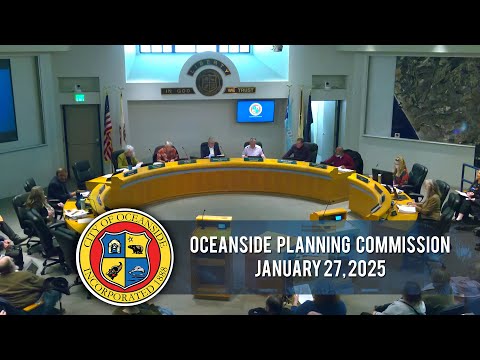
The Planning Commission voted 6-0 on Jan. 27 to grant a regular coastal permit for a roughly 4-acre habitat restoration project led by the Buena Vista Audubon Society adjacent to Buena Vista Lagoon, approving habitat improvements, a short accessible nature trail and a habitat-management program with monitoring and agency oversight.
The Oceanside Planning Commission unanimously approved a regular coastal permit for a 4-acre habitat restoration project on land owned by the Buena Vista Audubon Society, the City of Oceanside and the California Department of Fish and Wildlife. The restoration and resiliency project will regrade historic fill, improve water-quality runoff controls, expand freshwater marsh habitat and create an accessible, formal nature trail with interpretive signage.
Shannon Vitale, the city’s senior planner, described the proposal as an effort to restore and enhance existing freshwater wetland areas that would be affected by a larger Buena Vista Lagoon restoration project. Vitale told commissioners the project qualifies as a statutory exemption restoration project (SERP) under state law and noted the California Department of Fish and Wildlife issued a concurrence letter for the SERP application in October 2020. The project site is adjacent to the North Shore of Buena Vista Lagoon; a portion of the full reserve parcel lies in the City of Carlsbad and is not part of this permit.
Natalie Shapiro, executive director of the Buena Vista Audubon Society, said the goals are to restore native habitat, improve water quality, reduce erosion, and integrate the reserve with the larger lagoon restoration and sea-level-rise adaptation. Shapiro said the project will also create “a gathering area for indigenous peoples” in the trail design and will be developed with input from local tribal representatives.
Diane Nygard of Preserve Calavera urged approval and described wetlands as “the lungs of the watershed,” noting the county has lost an estimated 95% of historic wetlands and that restoration provides flood and pollutant filtering benefits.
Key project elements and approvals:
- Project area and jurisdiction: The permit covers roughly 4 acres of active restoration within the Wetlands Reserve property adjacent to Buena Vista Lagoon. Three landowners hold interests in the property: Buena Vista Audubon Society, the City of Oceanside and the California Department of Fish and Wildlife. Part of the larger reserve is within Carlsbad city limits and was excluded from this permit.
- Habitat and public access: The project restores freshwater marsh and coastal sage habitats, improves erosion and runoff control (bioswales and sediment-filtering basins), and constructs a roughly 0.26-acre formal pedestrian nature trail that replaces an informal trail. Educational signage and an accessible lookout are included.
- Environmental review and funding: Staff determined the project qualified for the SERP exemption and said outreach and agency coordination were extensive; the project received grant funding from private foundations and a state Coastal Conservancy grant. Vitale confirmed the Department of Fish and Wildlife provided a concurrence letter for the SERP.
- Agency permits: Because part of the restoration lies within the Coastal Commission’s permitting area, the applicant must also apply for a coastal-development permit from the California Coastal Commission.
The commission adopted Planning Commission Resolution 2025 P01 and voted 6-0 to approve the regular coastal permit RC 24-2, as recommended by staff. Commissioners’ disclosures recorded multiple site visits and document review; no commissioner abstained. Staff and the applicant said final design and management details — including a habitat-management plan and invasive-species removal sequencing — will be addressed in the project’s conditions of approval and the habitat restoration plan.
Ending
Commissioners praised the community and nonprofit partners for acquiring and protecting the property and adopted the permit with conditions directing implementation of the habitat-restoration plan, monitoring and agency-approved habitat management in perpetuity.