Lifetime Citizen Portal Access — AI Briefings, Alerts & Unlimited Follows
Pharmacogenomics pilot for state employees tabled after committee questions about outcomes and evidence
Loading...
Summary
A proposal to start a voluntary pharmacogenomics program for state employees was tabled by the subcommittee after discussion about evidence, measurable outcomes and program structure; supporters said prior private-plan pilots produced positive clinical results but members sought validated, long-term outcome data.
House Bill 2367, introduced by Delegate Higgins, would establish a voluntary two-year pharmacogenomics pilot for state employees and dependents, prioritizing participants taking five or more medications. Proponents said pharmacogenomics—testing genetic variants that affect drug metabolism—can reduce adverse drug reactions, improve outcomes, and reduce health-plan costs for high-utilizer patients.
Delegate Higgins and an online witness who ran a large Taft-Hartley plan described prior pilot work claiming improved clinical outcomes (weight loss, lower A1C, better blood pressure control) and patient-reported benefits. The bill’s sponsor said pharmacogenomic tests are inexpensive (cheek-swab tests reported at roughly $200) and argued starting with the small group that drives the majority of costs would be cost-effective.
Members asked about registries, data handling, who would receive results, and how outcomes would be measured and validated. Witnesses said results were returned to patients and their clinicians for medication adjustments. Several members said they would like validated, peer-reviewed evidence and a clear plan for long-term follow-up before state adoption.
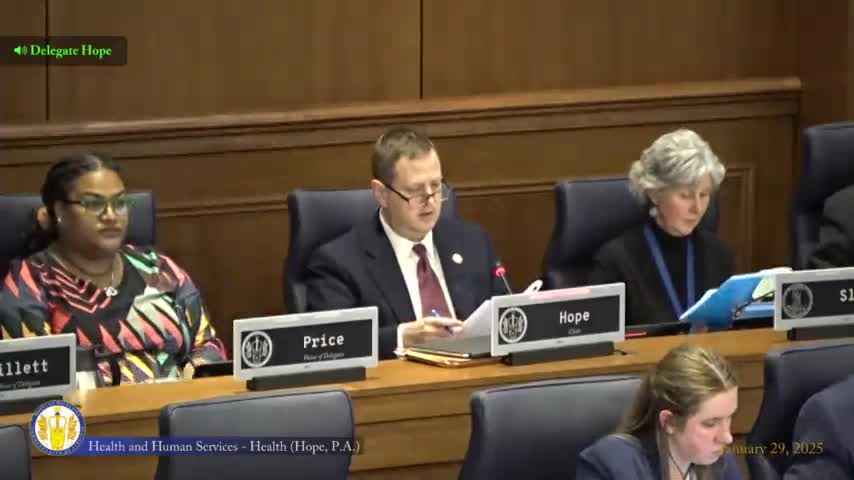
Action: At the patron’s request following discussion, Delegate Taylor moved to lay the bill on the table; the motion carried by a vote of 8 to 0, tabling the measure.
Ending: The bill was tabled to allow time for additional evidence and details about data handling, measurement of outcomes, and program safeguards.